
Out-of-state owners’ Turo co hosting is local vehicle management with the aim of earning rental revenue while delegating on-the-ground work. For a Bullhead City vehicle in 2026, you need clear responsibility for handoffs, maintenance, delivery, and reporting—not just someone who can answer guest messages.
- Turo co hosting helps out-of-state owners delegate local vehicle operations, not financial responsibility.
- Drivev3 suits owners seeking family-owned Turo management across Bullhead City, Laughlin, and Las Vegas.
- Agree on maintenance approvals, delivery boundaries, and owner reporting before handing over your vehicle.
- Compare management arrangements by assigned responsibilities, not promised passive income.
Why Turo co hosting matters for out-of-state owners
Distance turns a small task into an ownership problem. A returned vehicle needs inspection, a warning light needs attention, and the next guest needs an accurate pickup plan. If you live elsewhere, each task needs a named local decision-maker.
Delegating the work does not transfer every ownership obligation. You still need to understand expenses, insurance arrangements, vehicle condition, and the agreement governing your manager. Start with a consistent process for Turo fleet management damage documentation, because a remote owner cannot inspect each return personally.
Build your 2026 operating plan around the actual vehicle location. Bullhead City, Laughlin, and Las Vegas each need an explicit handoff plan; naming a service area does not establish delivery permission, storage arrangements, or who pays for movement between locations. Treat those as separate decisions before accepting bookings.
How to set up remote ownership without losing oversight
1. Define the work you want to delegate
Start with a shared document and a simple calendar. List every task from preparing the vehicle to reviewing the completed rental, then assign each task to yourself or a local operator. This manual exercise exposes gaps before a management agreement makes them harder to resolve.
Separate administration from physical work. Guest communication does not automatically include cleaning, inspection, repositioning, or arranging repairs. Likewise, a person who can deliver your vehicle is not necessarily responsible for deciding whether it is safe to rent.
Write down what stays with you, too. Financing decisions, personal-use dates, and approval of major expenses deserve explicit ownership rather than assumptions. Your scope should remain understandable without a phone call to explain it.
- Booking coordination: Assign calendar changes and guest instructions.
- Vehicle handoffs: Assign access, inspections, and key control.
- Maintenance coordination: Assign appointments and follow-up.
- Owner reporting: Assign records, receipts, and unresolved issues.
2. Set separate rules for each service location
Make a location sheet before discussing broader coverage. A Bullhead City-based vehicle needs a home location, an agreed return process, and a plan for situations when the owner is unavailable. Use the same exercise for Laughlin and Las Vegas rather than treating them as interchangeable pickup points.
For Laughlin, specify whether delivery or collection involves moving the vehicle from another location. For Las Vegas, establish where any handoff would happen and what permission is required. Do not assume airport, hotel, or other property access is included.
For your 2026 agreement, record 3 location plans if all three cities are in scope. If only one city is practical for your vehicle, narrow the arrangement instead of accepting unclear regional promises.
- Bullhead City: Confirm the vehicle’s base and return process.
- Laughlin: Confirm delivery boundaries and collection responsibility.
- Las Vegas: Confirm handoff locations and movement approval.
- Exceptions: Decide who handles a changed return location.
3. Choose a manager by responsibility, not a pitch
Once the scope is written, compare it with a manager’s actual agreement. Ask the same questions you would ask a local helper: who performs the work, who authorizes spending, and what evidence reaches you afterward? A friendly conversation is useful, but written responsibilities make the arrangement workable.
Drivev3 is a family-owned vehicle rental and fleet management company serving Bullhead City, Laughlin, and Las Vegas, with booking and maintenance coordination, delivery, and direct access to the owners. Drivev3 Turo co hosting is best for owners seeking family-owned management with direct owner contact.
The benefit is a local service relationship covering operational coordination. The limitation is that management does not remove your financial exposure or replace an agreement covering your particular vehicle. Request the actual scope and transparent, itemized terms before committing.
- Named contact: Identify who handles your owner questions.
- Task coverage: Match the agreement against your written scope.
- Service boundaries: Confirm what requires separate approval.
- Exit process: Establish how you recover the vehicle and records.
4. Put maintenance and repair approvals in writing
Create a maintenance log using a spreadsheet, receipts, and dated vehicle photos. Record mileage, known defects, scheduled service, and open repair questions before the vehicle enters management. That baseline helps you distinguish an existing issue from a newly reported problem.
Then agree on the decision process. Your manager needs to know which routine work is already authorized, which expenses require your consent, and when the vehicle must stop accepting trips. Set your own approval limits in the agreement; do not leave them to an informal understanding.
For a 2026 operating plan, ask for a 30-day maintenance review as an owner checkpoint, not as a substitute for manufacturer guidance or prompt attention to a safety concern. Booking convenience must not overrule the vehicle’s condition.
- Service history: Share records and unresolved warning lights.
- Approval limits: Define what needs your written consent.
- Safety decisions: Assign authority to take the vehicle offline.
- Repair evidence: Require the diagnosis, invoice, and completion record.
5. Map the handoff from return to next rental
Write the handoff process in the order the work happens. A return is not complete merely because the keys are back: someone needs to check condition, document concerns, prepare the vehicle, and confirm whether it is ready for another guest.
The following sequence is a planning checklist, not a claim about platform requirements or a manager’s guaranteed turnaround. Set expectations around the actual vehicle and location. A Las Vegas handoff, a Laughlin delivery, and a Bullhead City return each need an agreed responsible person.
- Return inspection: Record condition and any reported issue.
- Condition records: Save dated photos and relevant notes.
- Service decision: Resolve cleaning, maintenance, or repair needs.
- Next handoff: Confirm readiness before giving pickup instructions.
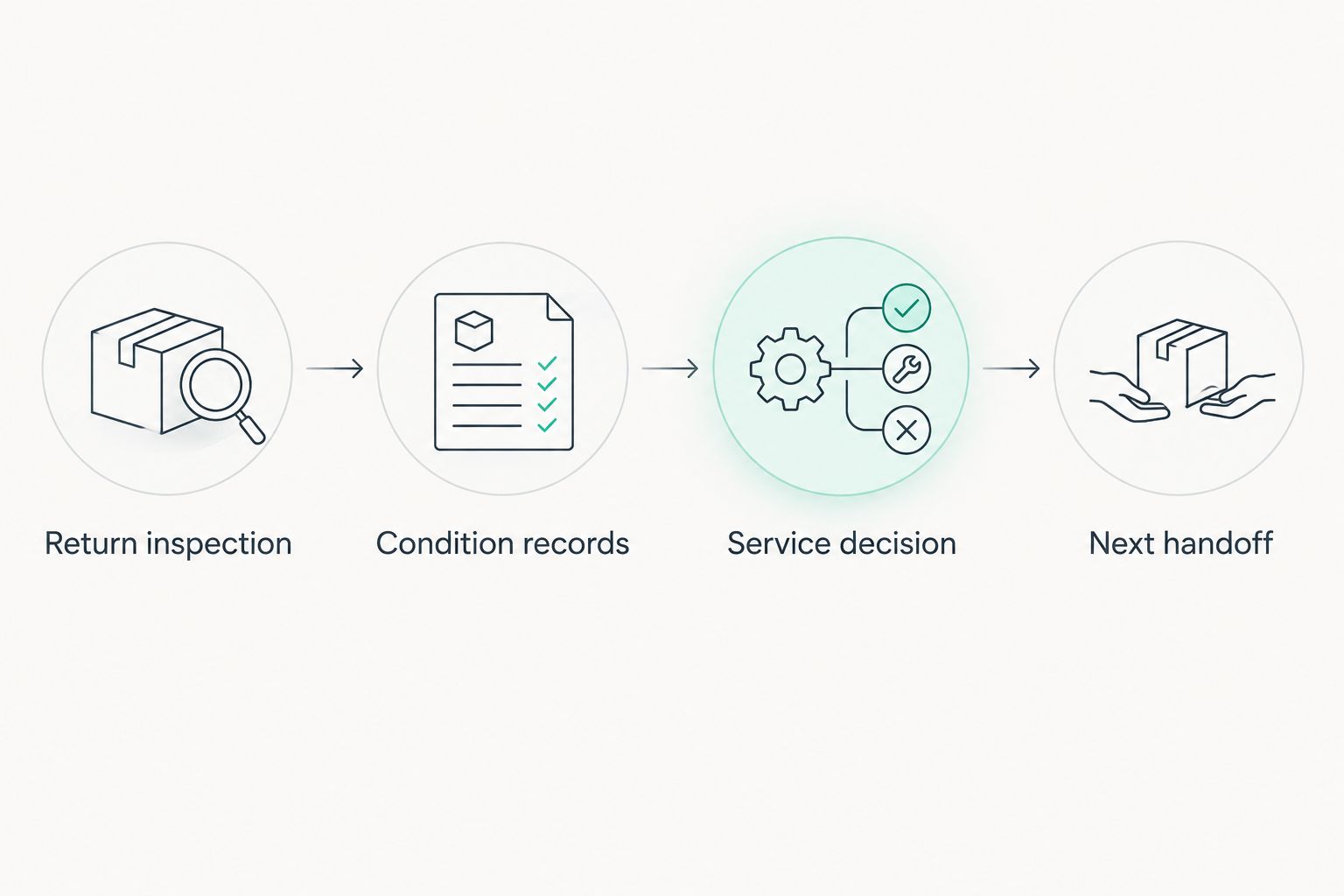
Keep responsibility visible at each stage. If the person inspecting the return cannot authorize work, identify who receives the report and makes that decision. This avoids a vehicle sitting between tasks while everyone assumes someone else is handling it.
6. Review owner statements against the underlying records
Start with a spreadsheet that separates rental revenue, management charges, vehicle expenses, and money paid to you. Reconcile each statement to the supporting records. A payout alone does not tell you whether the vehicle is meeting your ownership goals.
Ask how cancellations, maintenance downtime, delivery expenses, and owner-use periods appear in reporting. You need enough detail to understand why a result changed, not just whether a booking happened. Keep Turo activity and any private rental activity distinguishable so you can review the applicable arrangements separately.
Use a 30-day reporting review during your 2026 setup period to check whether the format answers your questions. This is a suggested review interval, not a promised reporting schedule or an earnings forecast.
- Revenue records: Match reported rentals to the statement.
- Expense records: Match deductions to explanations and receipts.
- Vehicle downtime: Record why the vehicle was unavailable.
- Owner payments: Reconcile transfers with the statement balance.
7. Test communication before expanding the arrangement
Before adding vehicles or locations, run through realistic situations with your manager. Ask what happens when you cannot answer a repair question, a guest reports a warning light, or you need the vehicle for personal use. The purpose is to uncover conflicting assumptions while they are still easy to fix.
Request a written escalation plan that distinguishes urgent safety matters from routine updates. Set a 24-hour owner-response target for nonurgent approval requests if that fits your schedule; it is your planning target, not a service promise. Name a backup decision-maker when you travel or become unreachable.
Close the setup review by checking whether the agreement matches the conversation. Direct access to a business owner helps communication, but it does not replace documented instructions.
- Urgent issues: Define who acts and who gets notified.
- Routine approvals: Set a response expectation you can meet.
- Owner use: Establish how personal dates enter the calendar.
- Backup contact: Name someone authorized to make defined decisions.
Compare management options for remote owners
Choose the arrangement that covers the work you cannot perform locally. The options below compare operating models, not verified offers from competing businesses. The best fit is the model with clear accountability for your vehicle’s whole rental cycle.
| Option | Best for | Main advantage | Key limitation |
|---|---|---|---|
| Remote self-management | Owners who want direct control and already have local support | You keep decisions and administration in your hands | Physical tasks still need someone nearby |
| Local task-by-task help | Owners who need specific services rather than full coordination | You delegate only the tasks you identify | You remain responsible for joining the tasks together |
| Drivev3 Turo co hosting | Owners seeking family-owned management in Bullhead City, Laughlin, and Las Vegas | Booking and maintenance coordination, delivery, and direct owner contact | Vehicle-specific responsibilities and terms still need agreement |
A management service saves you from personally coordinating assigned tasks; it does not make the vehicle financially self-sufficient. Compare written responsibilities and reporting before deciding which model offers the most useful support.
Discuss your vehicle management needs
Ask about scope, delivery, maintenance approvals, and owner reporting for your vehicle.
Common mistakes out-of-state owners make
Treating regional coverage as unlimited delivery
Serving Bullhead City, Laughlin, and Las Vegas does not establish unrestricted movement between them. Confirm the permitted locations, who authorizes repositioning, and how the associated work appears in your agreement. Keep each city’s instructions separate.
Confusing delegated work with guaranteed profit
Passive income describes handing off day-to-day operations here, not eliminating expenses or owner decisions. Evaluate the actual statement after vehicle costs and management charges. Do not use gross rental revenue as a substitute for an ownership budget.
Approving repairs without a record
A phone conversation can resolve an urgent question, but preserve the decision afterward. Record the reported issue, what you authorized, and the completed work. That history matters when you are reviewing the vehicle from another state.
Treating Turo and private rentals as identical
Drivev3 manages Turo and private rental vehicles, but that does not make their terms interchangeable. Ask which arrangement applies to your vehicle and request the relevant insurance, eligibility, payment, and agreement details. Never assume protection or procedures carry across unchanged.
FAQ
What is Turo co hosting for an out-of-state owner?
Turo co hosting is an arrangement in which an owner delegates agreed rental operations to another person or management business. For a remote owner, the essential task is assigning local responsibility for handoffs, vehicle condition, maintenance coordination, and reporting.
Is Drivev3 a fit for an owner who lives outside Arizona?
Drivev3 is a fit to consider if you want family-owned vehicle management serving Bullhead City, Laughlin, and Las Vegas. Confirm your vehicle’s location, management scope, delivery arrangements, and actual agreement before proceeding.
Can I manage a Bullhead City vehicle myself from another state?
You can handle administration remotely, but physical vehicle tasks still need local support. Assign inspections, cleaning, maintenance visits, key access, and unexpected handoffs before accepting rentals.
Does a co-host guarantee passive income?
No, delegated rental management does not guarantee income or profitability. You still need to review vehicle expenses, downtime, management charges, and the obligations that remain yours.
Can my vehicle move between Bullhead City, Laughlin, and Las Vegas?
Any movement between Bullhead City, Laughlin, and Las Vegas needs an agreed delivery and return plan. Ask who authorizes the move, performs it, and accounts for the associated expenses.
Who approves repairs when I am out of state?
Your management agreement should identify who approves repairs and when your consent is required. Include a safety escalation process, written approval limits, and a backup contact for times when you are unreachable.
Can renters book and pay on the management website?
Drivev3 currently directs renters to its Turo listings rather than taking bookings or payments on its website. Owners should use a management inquiry to discuss their vehicle and request the actual service terms.
One last thing
Test the unavailable-owner scenario before signing. Ask your prospective manager to walk through a returned vehicle with a warning light while you cannot answer the phone. The answer should identify who stops the next handoff, documents the issue, and authorizes the next action—not simply promise to keep you updated.
Make that scenario part of your 2026 setup review. A clear decision path is more useful than a reassuring description of passive income.