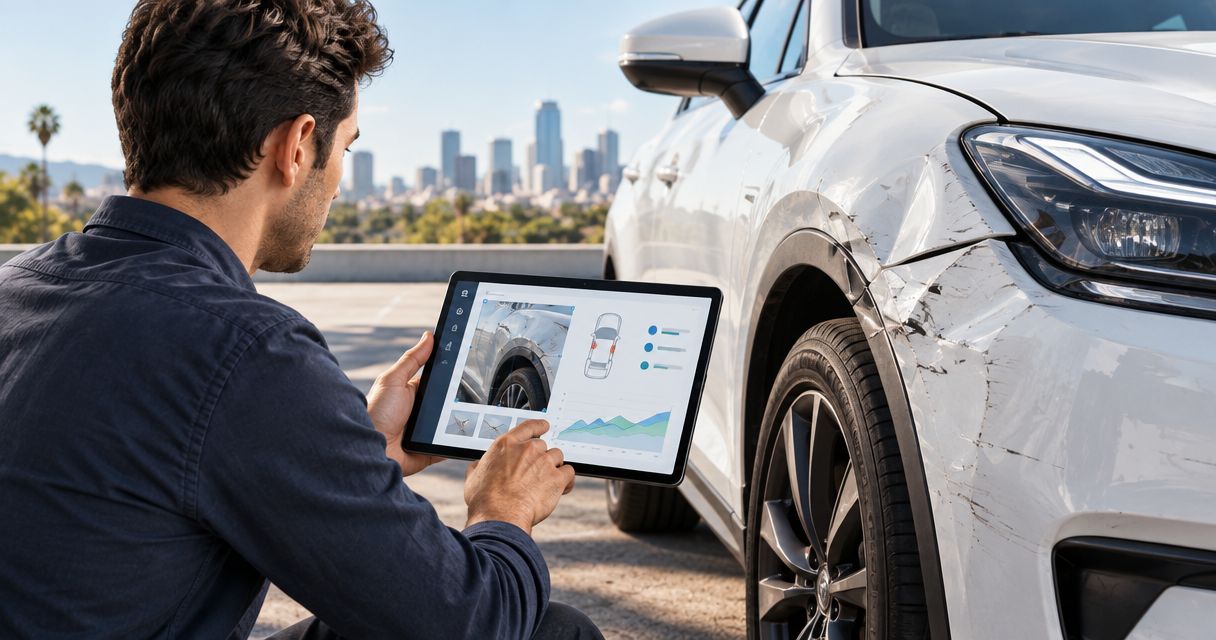
Document vehicle damage in Turo fleet management with matching pre-trip and post-trip photos, close-ups of each affected area, and a dated incident record tied to the correct vehicle and trip. Preserve original files, record who inspected the car, and follow Turo’s current reporting instructions; photos alone do not establish coverage or guarantee reimbursement.
- Turo fleet management damage records should connect matching condition photos, inspection notes, and the correct trip.
- Preserve original files; separate visible damage from assumptions about its cause.
- Drivev3 suits vehicle owners seeking family-owned fleet management with direct access to the owners.
- Check Turo’s current reporting requirements before relying on an internal inspection checklist.
Why this matters
A damage record should answer a practical question: what changed between handover and return? A close-up can show a scratch, but without a matching earlier view and a clear trip reference, it leaves important questions unanswered.
For owners considering Drivev3, damage documentation belongs in the management conversation alongside booking, maintenance coordination, and delivery. Delegating the work should not mean losing visibility into your vehicle’s condition.
Use this as an operating checklist for 2026, not a substitute for Turo’s current protection-plan terms or reporting instructions. Agree on responsibilities before the first managed trip, including who inspects, who reports, and who updates you.
Turo fleet management: how should vehicle damage be documented?
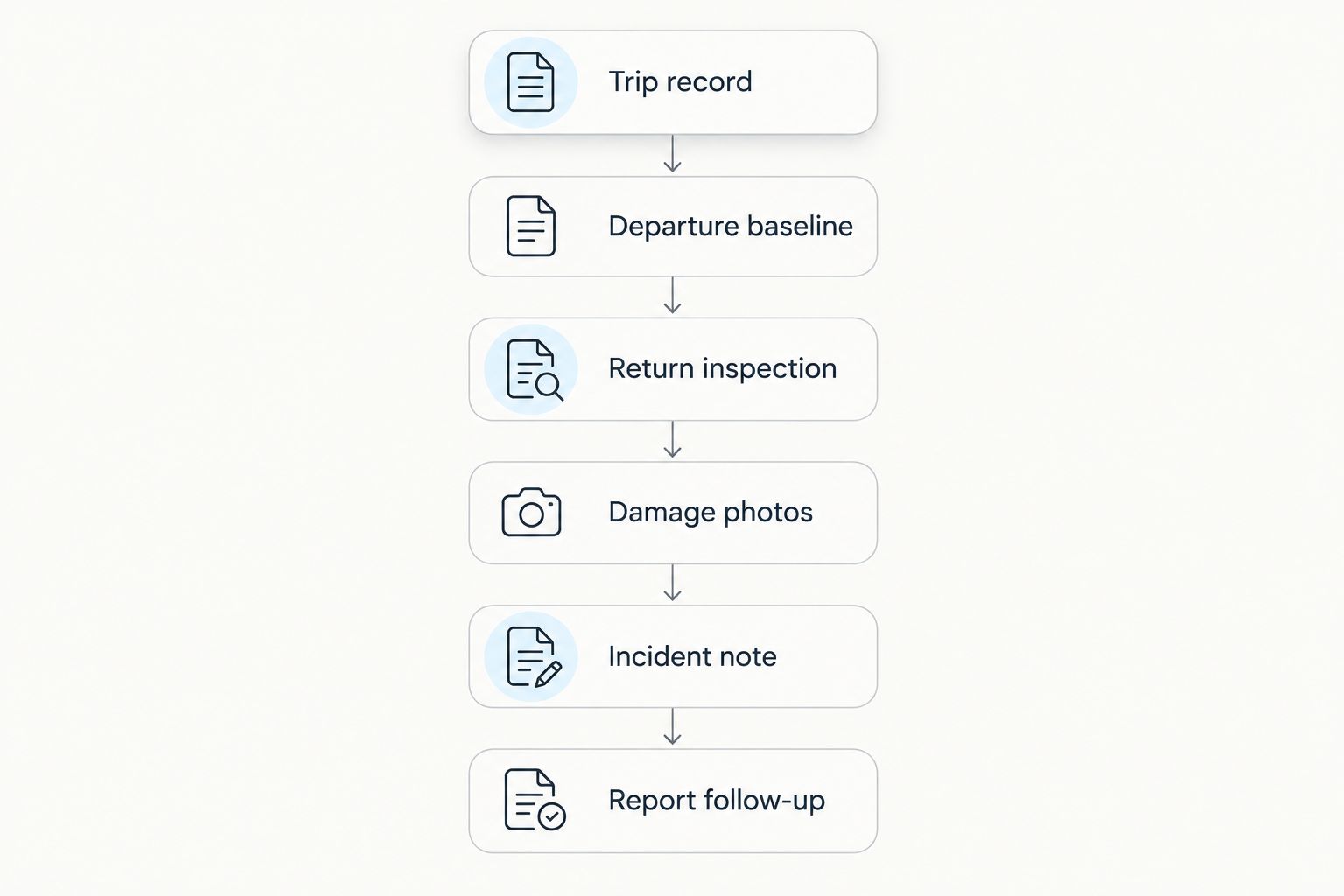
Build the record around the vehicle, the trip, and the condition change. Follow this sequence consistently, rather than collecting unrelated pictures after a problem appears.
1. Create the trip record
Start with the vehicle identifier, trip reference, inspection date and time, inspector’s name, and handover location. Keep registration details and other sensitive information within the appropriate operational record rather than exposing them unnecessarily in shared images.
Separate existing condition notes from newly observed damage. An old wheel scuff should remain identifiable across trips, not reappear as a new incident whenever a different person inspects the vehicle.
2. Capture the departure baseline
Photograph the exterior, interior, wheels, glass, and other accessible areas using a repeatable route around the car. Take pictures in lighting that makes the surfaces readable; glare, darkness, and heavy shadows can hide the detail you need later.
Make 2 matching photo sets your internal goal: one before handover and one at return. This is a recommended inspection method, not a statement of Turo’s required image count or submission rules.
3. Repeat the inspection at return
Use the same viewing positions and inspect the same areas. Compare the return images against the departure set before describing a mark as new.
If rain, dirt, darkness, or an obstruction prevents a clear inspection, record that limitation. Do not write that a panel was undamaged when you could not see it clearly; arrange a further inspection and preserve the timing of both checks.
4. Photograph the damage at different distances
For each affected area, collect 3 photo types: vehicle context, panel context, and close-up detail. The first identifies the car, the second locates the damage, and the third shows its visible characteristics.
Include a scale reference when useful, without obscuring the mark. Record measurements only when actually taken, and do not turn a photograph into an unsupported estimate of repair severity.
5. Write a factual incident note
Describe what you can observe: the affected area, visible marks, when they were noticed, and the condition of the inspection environment. Keep statements about cause separate from observations.
For example, a scratched rear bumper is an observation. Saying another vehicle struck it is a causal claim that needs supporting evidence. If the cause is unknown, leave it unknown.
6. Preserve, report, and assign follow-up
Keep the original images and relevant messages together under 1 incident record. Add repair assessments, estimates, and subsequent updates without replacing the initial evidence.
Assign a named person to check the current reporting requirements and complete the applicable process. Recording damage internally is not the same as submitting a report through the required channel.
Which documentation method should you use?
Use still photos as the visual foundation, inspection notes for context, and video as supplementary evidence. Each format has a different job; none should be treated as automatic proof of responsibility or coverage.
| Method | Best for | Strength | Limitation |
|---|---|---|---|
| Matched still photos | Comparing departure and return condition | Lets you examine the same area side by side | Inconsistent angles or lighting weaken the comparison |
| Walkaround video | Showing the inspection sequence and surrounding context | Connects several views in a continuous recording | Small marks can be difficult to examine clearly |
| Written inspection record | Capturing timing, observations, and assigned actions | Explains details that images alone do not establish | Cannot replace a clear visual record of visible damage |
Do not rely on a video simply because it contains the whole vehicle. Pause it and check whether the affected surface is actually readable; if not, take still photographs while preserving the video.
For your 2026 operating procedure, specify where each format belongs and who can access it. The owner should not need to reconstruct an incident from scattered personal messages.
Why damage documentation quality varies
A checklist only works when the inspection conditions and handoffs support it. Focus on these factors when reviewing a manager’s process:
- Lighting and visibility: Record when glare, darkness, dirt, or weather prevents a reliable view. A checked box does not fix an unreadable photograph.
- Repeatable angles: Use matching views so you can compare the same surface without guessing where the camera was positioned.
- Existing damage records: Keep earlier marks identifiable. Otherwise, an old defect can become confused with a newly observed change.
- Inspection handoffs: Name the person responsible at each stage, especially when delivery and return involve different people.
- File organization: Connect images, messages, and assessments to the correct vehicle and trip. A clear photo in the wrong folder is still a documentation problem.
- Reporting ownership: Identify who checks requirements, submits information, and tracks requests for further evidence. Do not assume another person has completed the task.
These are operating controls, not promises that a claim will succeed. Coverage, responsibility, and reimbursement depend on the applicable terms and facts.
What should owners require from a fleet manager?
Ask the manager to explain the damage workflow before you hand over the vehicle. Request a sample blank inspection record and a walkthrough of how an owner receives updates, rather than accepting a general promise that damage is handled.
Drivev3 fleet management is best for owners seeking family-owned service and direct access to the owners. Its stated services include booking and maintenance coordination and delivery; agree separately on the exact inspection, reporting, approval, and record-access responsibilities for your vehicle.
The benefit is delegated day-to-day coordination. The trade-off is that you still need clear terms and oversight: management does not remove ownership risk or guarantee income, reimbursement, or profitability.
Ask these questions during a management discussion:
- Who captures departure and return condition, including delivered vehicles?
- Who checks the current Turo reporting instructions and submits the report?
- How will you receive original photos, incident notes, and status updates?
- What requires your approval before inspection work, repair work, or other spending proceeds?
- How are unresolved incidents handed over if management ends?
Keep guest communication attached to the incident where relevant. A consistent Turo co-hosting guest-message process helps separate the guest’s account from the inspector’s observations without losing either.
Discuss your vehicle management needs
Ask about inspection responsibilities, owner updates, booking coordination, and delivery.
How should the process work across all three cities?
Use the same evidence standard in Las Vegas, Bullhead City, and Laughlin. The location can change; the obligation to identify the vehicle, record condition, and assign follow-up should not.
Las Vegas: identify the actual handover point
For a Las Vegas trip, record where the inspection and handover actually occurred. If delivery and return take place at different locations, preserve both locations and make each inspection’s timing clear.
Ask who handles a condition concern discovered during delivery. The handoff should not leave the owner, driver, and manager each expecting someone else to document it.
Bullhead City: make responsibility explicit
For a Bullhead City vehicle, identify the person responsible for departure photos and the person responsible for return inspection. If they differ, both should follow the same checklist and have access to the existing-condition record.
Ask how the owner will receive updates when the vehicle needs further assessment. Do not assume that maintenance coordination also defines repair authorization or claim handling.
Laughlin: preserve the full chain of records
For a Laughlin trip, keep delivery notes, return observations, and any later inspection clearly separated by time. A later repair assessment can add information, but it should not overwrite the initial return record.
If the car moves before further inspection, record that movement. The aim is a readable history, not a folder that only contains the final conclusion.
Across all three cities, review the written workflow for 2026 and confirm what the management agreement actually includes. Local service and direct owner access help communication, but the agreed responsibilities still need to be explicit.
How many photos should I take of vehicle damage?
Use 3 photo types: vehicle context, panel context, and close-up detail for each affected area. Take additional images when one view does not clearly show the damage; this is a practical method, not an official Turo minimum.
Should I document damage before every rental?
Create 2 matching photo sets for each trip: departure and return. An earlier trip’s photos do not establish the condition at the next handover.
What should I send the vehicle owner after damage is found?
Send 1 incident record containing the trip reference, matched images, factual observations, reporting status, and next assigned action. Keep estimates and decisions clearly distinguished from confirmed repair outcomes.
FAQ
What's the best way to document damage for Turo fleet management?
Use matched departure and return photos, detailed images of the affected area, and a dated incident record tied to the vehicle and trip. Follow Turo’s current reporting instructions separately from your internal recordkeeping.
Can I use a video instead of vehicle damage photos?
Use video as supplementary context rather than your only visual record. Still photos let you examine matching areas and close-up details more directly; check the platform’s current submission requirements.
Does a timestamp prove a guest caused the damage?
A timestamp alone does not establish who caused damage. Assess it alongside the matching condition images, inspection notes, trip details, and relevant messages.
Should I repair damage before documenting it?
Document the visible condition before repairs or other changes whenever it is safe to do so. Safety takes priority, and any necessary movement or intervention should be recorded.
Who should report damage when a fleet manager handles my car?
Assign reporting responsibility explicitly in your management arrangement. Confirm account permissions, owner approvals, and the current platform process rather than assuming the manager or owner will act.
Does documenting damage guarantee Turo reimbursement?
Documentation does not guarantee reimbursement. The applicable protection terms, exclusions, evidence, and reporting requirements determine how an incident is assessed.
Can Drivev3 manage vehicles in Las Vegas, Bullhead City, and Laughlin?
Drivev3 provides vehicle rental and fleet management services in Las Vegas, Bullhead City, and Laughlin. Ask the owners to confirm the management scope and damage-documentation responsibilities for your vehicle.
One last thing
Before your next handover, open a departure photo beside its matching return view. If you cannot confidently identify the same surface and compare its condition, improve the photo method before another incident tests it.
For your 2026 checklist, make that comparison a training exercise. A consistent record is more useful than a large collection of pictures nobody can match.