
For Turo co-hosting in Las Vegas, confirm your vehicle’s storage address directly with the management company before handing over the keys; do not assume the guest pickup location is also its between-trip parking location. Get the parking arrangement, access rules, and responsibility for moving the vehicle in writing. Use the same checks for a vehicle managed in Bullhead City or Laughlin.
- For turo co hosting, confirm the storage address separately from guest pickup and vehicle delivery locations.
- Get written rules for keys, owner access, vehicle movements, and responsibility between bookings.
- Drivev3 suits vehicle owners seeking family-owned Turo management with direct access to the owners.
- Apply the same storage checks in Las Vegas, Bullhead City, and Laughlin.
Why this matters
Delegating bookings does not settle where your car stays when nobody is renting it. A pickup location tells you where a guest meets the vehicle, not necessarily where it waits overnight, receives attention, or returns after a trip.
Treat storage as part of the management agreement, not an informal detail. In 2026, your decision should rest on an agreed location and clear responsibilities—not an assumption based on a listing photo or meeting point.
Drivev3 provides family-owned vehicle management, including booking and maintenance coordination and delivery. Ask the owners to explain how those services connect to your vehicle’s proposed storage arrangement before you commit.
Turo co-hosting in Las Vegas: where will your vehicle be stored?
Your written agreement should identify where the vehicle stays between reservations and explain any approved alternatives. Keep 2 addresses separate in your questions: the storage address and the guest handoff address, even when the company proposes using the same place for both.
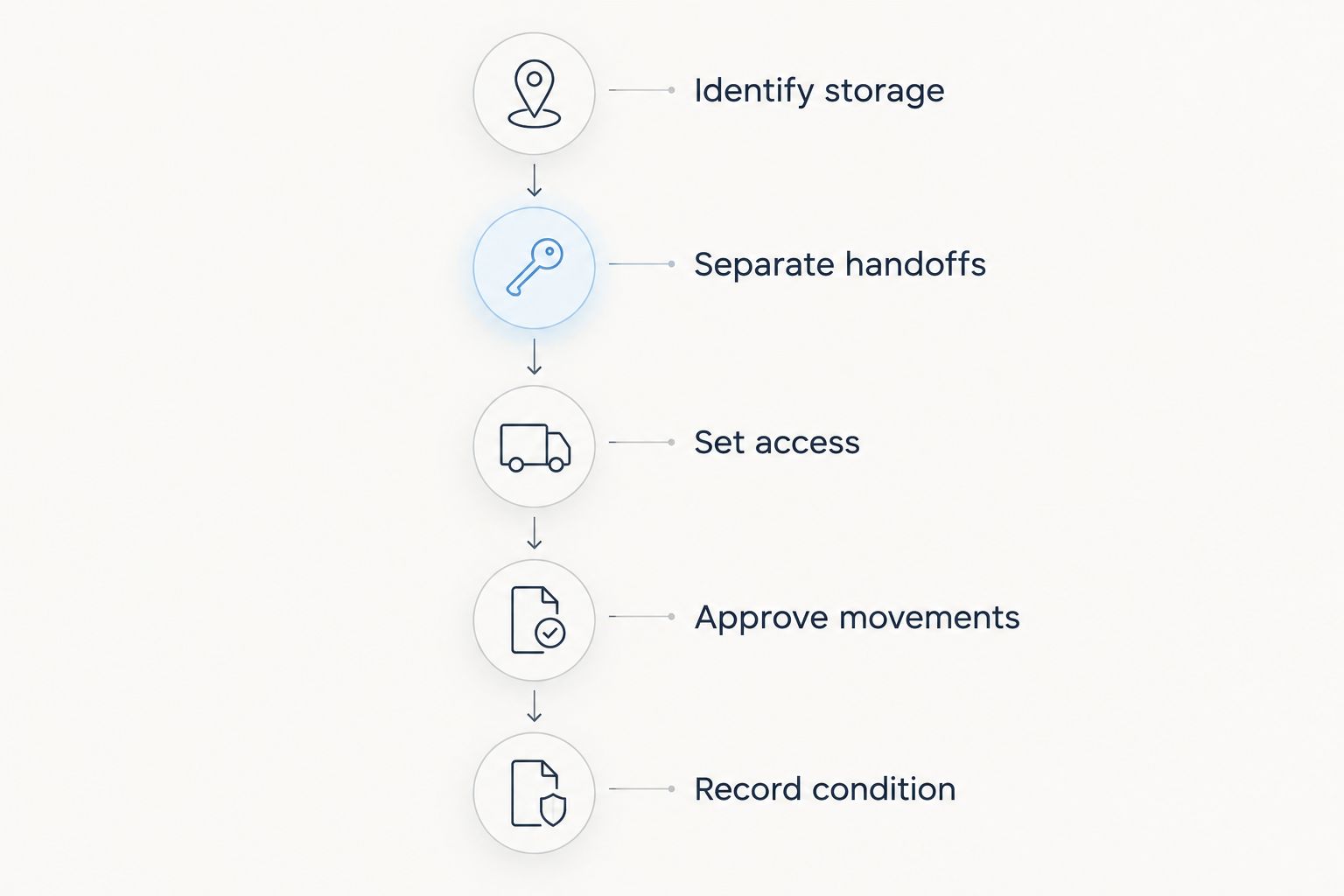
Work through this sequence before the first handover:
- Identify storage. Ask for the proposed address, parking arrangement, and person responsible for the vehicle while parked.
- Separate handoffs. Confirm whether guest pickups and returns happen there or require a vehicle movement.
- Set access. Agree who holds keys, who can collect the car, and how you request personal access.
- Approve movements. Establish which trips the manager can arrange and which need your permission.
- Record condition. Agree how the car’s condition and location are recorded when custody changes.
These are questions to resolve, not claims that every co-host provides the same facilities. A clear answer names the location and explains the process. “We take care of everything” does neither.
Which storage arrangement should you approve?
Compare the actual parking proposal rather than choosing by a label such as full-service management. Owner-held parking, manager-arranged parking, and separate storage with delivery each create different responsibilities.
The following are arrangements to evaluate, not a list of confirmed facilities or services from any particular manager. None settles insurance, access, or liability on its own.
| Proposed arrangement | Best for | Practical advantage | Trade-off to resolve |
|---|---|---|---|
| Owner-held parking | Owners who want the vehicle kept at their own location | You retain direct control over the parking location | Guest preparation and collection still need an agreed process |
| Manager-arranged parking | Owners delegating between-trip logistics | Storage and management tasks can be coordinated together | Confirm the address, access arrangements, and responsibility while parked |
| Separate storage and handoff locations | Owners considering delivery-based operations | Storage does not have to double as the guest meeting point | Every movement needs clear authorization and documentation |
Best for delegated operations: manager-arranged parking with written responsibilities. The benefit is coordination; the limitation is that you must agree how access, movements, and problems are handled before relying on it.
Owner-held parking is the better fit when retaining the location matters more to you than delegating that part of the work. Separate storage and handoffs suit a delivery-based plan only when the movement process is explicit. Ask for the plan that applies to your vehicle, not a generic description of the business.
Why vehicle storage arrangements vary
A useful 2026 storage proposal should explain the operating decisions behind the location. Start with these factors:
- Guest handoffs: Establish whether guests collect the vehicle from storage or meet it elsewhere.
- Delivery coordination: Ask who moves the vehicle, where it goes, and how each movement is authorized.
- Maintenance coordination: Confirm how the car reaches appointments and where it returns afterward.
- Owner access: Explain whether you need personal use and how collection will fit around bookings.
- Vehicle preparation: Agree where cleaning, inspection, and any required charging or fueling happen.
- Booking length: Ask how daily, weekly, and monthly rental periods affect parking and return arrangements.
Do not turn those factors into assumptions about your own agreement. Delivery coordination does not establish permission to park at any particular property, and maintenance coordination does not establish a storage facility.
Request the actual terms for storage-related charges and approval rules. A transparent proposal should let you distinguish the management service from any separately agreed parking, movement, or preparation responsibilities.
What should you ask in Las Vegas?
For a Las Vegas vehicle, begin with the difference between the storage address and the advertised guest meeting point. Ask the manager to walk through a complete reservation: where the car starts, where the guest receives it, and where it goes after return.
If an airport or another third-party property forms part of the proposal, request the applicable handoff and parking arrangements. Do not treat a convenient meeting point as proof that long-term storage there is permitted.
Ask what happens when a return changes. The written process should explain who receives the vehicle, who records its condition, and who confirms its next location. Your Las Vegas storage decision in 2026 should cover the quiet periods between bookings as clearly as the booked trips.
What should you ask in Bullhead City?
For a Bullhead City vehicle, establish the primary storage location before discussing deliveries elsewhere. If the proposed operating plan includes Laughlin or Las Vegas, ask which movements require your approval and how the manager records them.
Maintenance deserves its own question. Ask where the vehicle goes for an appointment, who authorizes work, and whether it returns to the agreed storage address afterward. A workshop visit and a permanent change of storage are different decisions.
Tell the manager whether you expect to collect the vehicle for personal use. Bullhead City owners should have an agreed collection process rather than assuming that access to the car remains unrestricted during management.
What should you ask in Laughlin?
For a Laughlin vehicle, separate delivery convenience from storage permission. A guest meeting at a hotel or another property does not establish that the vehicle can remain there between rentals.
Ask where the vehicle goes after the guest returns it and who confirms that the return process is complete. If the plan includes Bullhead City or Las Vegas, request the same movement and approval details you would require for a local handoff.
Your Laughlin arrangement should also explain how you retrieve the vehicle when management ends. Agree on the return location, key handover, and condition record before the first rental—not during the final collection.
What should the written storage agreement cover?
Use 1 written storage record as your reference point for the agreed arrangement. It can form part of the management agreement, but it should be specific enough that you and the manager can follow the same instructions.
Include these items:
- Location: The primary address and any approved alternative locations.
- Parking arrangement: Whether the proposed space is indoors, covered, or outdoors, and what access controls actually exist.
- Key custody: Who holds each key and how handovers are recorded.
- Owner collection: How you request access and who confirms the collection.
- Vehicle movements: Permitted purposes, approval requirements, and recording responsibilities.
- Incident handling: Who contacts you, preserves records, and coordinates the next step.
- End of management: Where and how the vehicle, keys, and records return to you.
Ask for the actual insurance and contractual terms that apply while the vehicle is parked and while someone moves it. Do not equate a parking description with an insurance promise. A controlled-access location, for example, does not answer who bears a particular loss.
Keep storage records connected to your Turo fleet management damage documentation. Location, custody, and condition should be understandable together without reconstructing a chain of informal messages.
How do you check the process before handing over keys?
Ask the manager to describe 3 stages: before a booking, during a guest handoff, and after a return. At each stage, identify who has the vehicle, where it belongs, and what record confirms the change.
Then test an exception. Ask what happens if the planned parking location cannot be used or a maintenance appointment changes the return plan. You need an approval process, not a promise that plans never change.
Before you proceed in 2026, read the written answer against the conversation. If the manager describes owner access verbally but the agreement says something different, resolve that difference first. The same applies to parking responsibilities and vehicle movements.
Keep a copy of the agreed arrangement and the initial handover record. When a location changes later, request written confirmation so an outdated address does not remain your only reference.
Who is family-owned Turo management best for?
Drivev3 is best for vehicle owners seeking family-owned Turo management with direct access to the owners. Booking coordination, maintenance coordination, and delivery are relevant when you want help with day-to-day rental operations rather than handling every task yourself.
The trade-off is that delegation still requires decisions from you. You must review the management terms, approve the responsibilities you retain, and understand the proposed storage arrangement. Passive income here means delegated operations—not guaranteed earnings or effort-free profit.
Drivev3 serves Las Vegas, Bullhead City, and Laughlin. Bring the same questions to a management inquiry in each city, and request the actual vehicle-specific terms rather than assuming one arrangement applies everywhere.
Discuss your vehicle’s storage plan
Ask about storage, owner access, booking coordination, and maintenance responsibilities before committing.
Is the pickup address also the storage address?
The pickup address is not enough to establish the storage address. Ask whether the vehicle remains there between reservations or arrives only for handoffs, and record both locations if they differ.
Can I collect my vehicle for personal use?
Personal collection depends on your management agreement and booking commitments. Agree on the request process, collection location, and confirmation before treating the vehicle as ready for your own trip.
Who is responsible while the vehicle is parked?
Responsibility while parked must be established through the management agreement and applicable insurance terms. Ask who controls access, handles an incident, and contacts you; do not infer those answers from who holds the keys.
FAQ
Where will my car be stored with Turo co hosting in Las Vegas?
Confirm the storage address directly with your co-host before handing over the vehicle. Record the between-trip parking location separately from any guest pickup or delivery point.
Does Turo co-hosting automatically include indoor storage?
Do not assume Turo co-hosting includes indoor storage. Ask whether the proposed parking is indoors, covered, or outdoors, and get the actual arrangement in writing.
Can I choose where my managed vehicle is parked?
Your management agreement must establish who chooses the parking location. Explain your requirements before signing and agree how any later location change will be approved.
What should I ask about storage in Bullhead City?
Ask for the Bullhead City storage address, owner-access process, and maintenance movement arrangements. If deliveries involve another city, confirm authorization and recording responsibilities.
What should I ask about vehicle storage in Laughlin?
Ask where the vehicle stays between Laughlin bookings and where it returns after delivery. A guest meeting point does not establish permission for between-trip parking.
Does a co-host’s storage arrangement guarantee insurance coverage?
A storage arrangement does not establish insurance coverage. Request the applicable insurance documents and contract terms for parking, vehicle movements, and incident responsibilities.
How do I ask Drivev3 about managing my vehicle?
Contact Drivev3 through its website to discuss your vehicle, operating city, storage expectations, and management needs. Request the actual terms before agreeing to hand over the vehicle.
One last thing
Ask this before signing your 2026 management agreement: If my vehicle needs to leave its agreed storage location between bookings, who approves the move and how will I know where it went? The answer connects parking, key custody, maintenance, and owner control in a single practical test.
A useful storage plan does more than name a parking space. It tells you how the car gets there, who can move it, and how you get it back.