
Yes—personal use can fit into Turo fleet management when your management agreement allows it and your dates do not conflict with confirmed reservations. You need an agreed process for reserving owner-use dates, collecting the car, and returning it ready for rental. Ownership alone does not establish the manager’s notice requirements, handoff arrangements, or insurance terms.
- Turo fleet management and personal use can coexist when your agreement protects owner-use dates and existing reservations.
- V3 Rentals suits owners seeking family-owned vehicle management; confirm personal-use terms directly before signing.
- Agree on calendar changes, handoffs, vehicle condition, and insurance responsibilities before taking the car.
- Choose planned owner access over informal pickup arrangements that leave booking responsibilities unclear.
Can you use your own car during Turo fleet management?
You can retain personal access if your agreement specifically provides for it. The useful question is not simply whether owner use is permitted. It is whether the process works for the way you actually need your car.
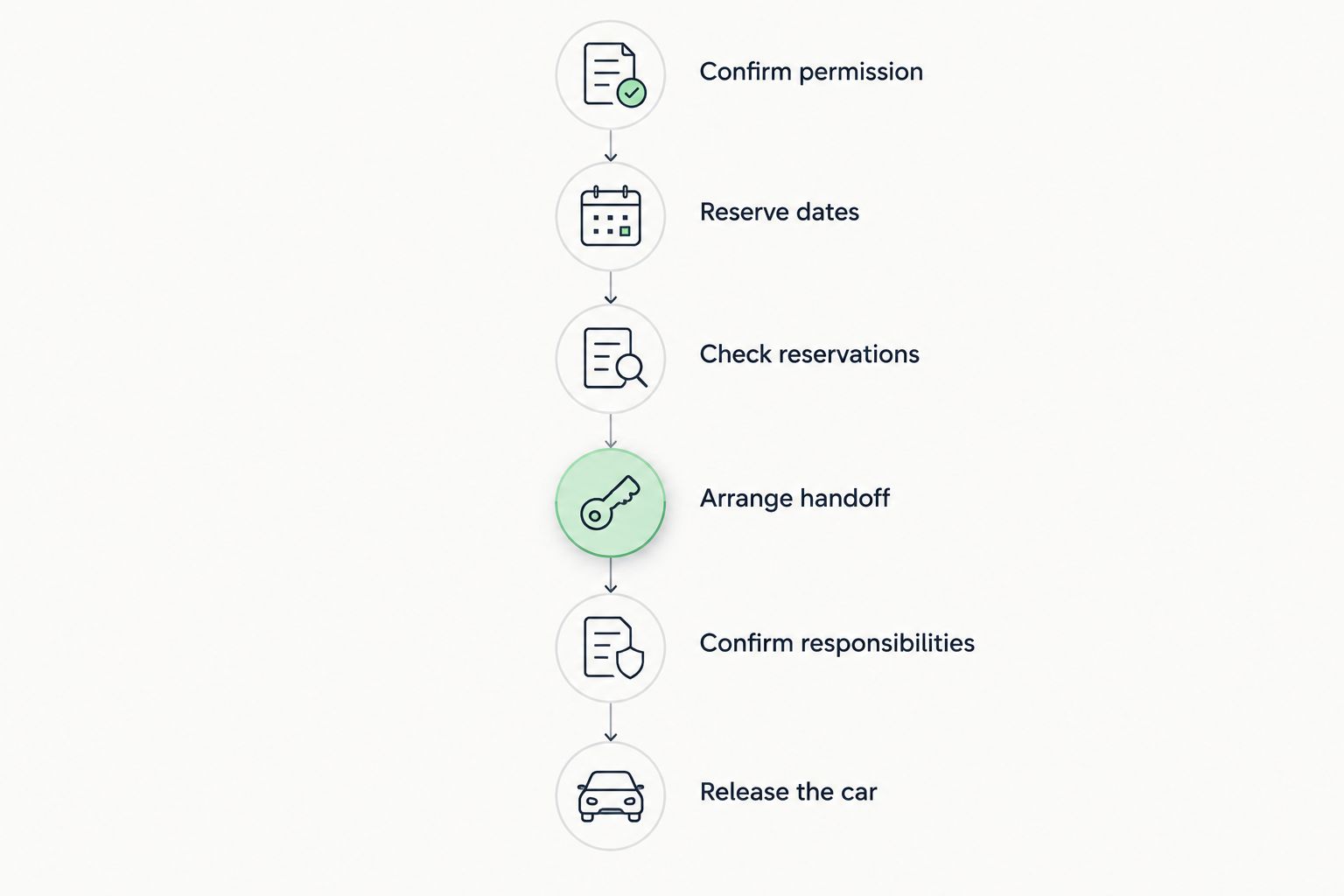
Before signing a management agreement in 2026, settle the following steps in writing. Keep the instructions accessible to everyone responsible for scheduling or handing over the vehicle.
- Confirm permission. Ask whether the proposed agreement permits personal use and whether any restrictions apply.
- Reserve dates. Establish who records owner-use dates and how you receive confirmation that the car is reserved for you.
- Check reservations. Have the manager confirm that your requested dates do not overlap an existing guest commitment.
- Arrange handoff. Agree on the collection location, return location, keys, and the vehicle’s expected condition.
- Confirm responsibilities. Clarify insurance, mileage records, cleaning, fuel or charging, and incident reporting.
- Release the car. Notify the manager when your personal trip ends so the vehicle can be checked before its next rental.
Use the same condition-recording discipline at both handoffs. This guide to Turo fleet management damage documentation covers the documentation topic to discuss with your manager.
Why this matters
A vehicle cannot serve your personal trip and a guest’s reservation at the same time. Delegating rental operations does not remove that scheduling decision; it makes a clear decision process more important.
Personal access also changes what you should look for in a manager. If you need the car regularly, an arrangement focused only on rental availability does not match your priorities. If personal use is rare, a documented request process deserves more attention than a standing weekly schedule.
Treat your 2026 agreement as an operating plan, not just permission to list the car. The right arrangement protects the access you need without making promises about rental income.
Which personal-use arrangement fits your needs?
Start with your own calendar. The following are arrangements to discuss with a prospective manager, not confirmed service options or contract terms offered by any particular company.
| Arrangement | Best for | Main benefit | Main limitation |
|---|---|---|---|
| Recurring owner-use dates | Owners with predictable personal driving needs | Establishes a repeatable schedule | Those dates are unavailable for guest rentals |
| Occasional reserved dates | Owners planning personal trips in advance | Keeps access tied to specific requests | Each request needs confirmation against reservations |
| Rental-only allocation | Owners who do not need the vehicle personally | Separates personal transport from the rental calendar | Does not provide planned personal access |
Recurring owner-use dates
Best for: owners who know when they need their vehicle. Tell the manager which periods you want reserved before agreeing to the rental schedule. Ask how that schedule will appear in every calendar used to manage the vehicle.
The benefit is predictability. The trade-off is equally clear: time reserved for your use cannot also be offered for guest use. Do not assess this arrangement using promised earnings; assess whether it preserves the access you need.
Occasional reserved dates
Best for: owners whose personal trips are planned rather than routine. Request the full period you need, including the collection and return arrangements, rather than only the dates you expect to drive.
This approach avoids reserving recurring periods you will not use. Its limitation is uncertainty until the manager confirms the request, so do not treat an unanswered message as an approved reservation.
Rental-only allocation
Best for: owners with separate personal transportation. If you do not need the managed vehicle yourself, say so explicitly when discussing the operating plan.
This separates your everyday transport needs from guest scheduling. The downside is that you must arrange other transportation rather than assume you can collect the managed vehicle whenever your plans change.
Why personal access varies between management agreements
The phrase “owner use allowed” leaves several practical questions unanswered. Compare these factors when reviewing a Turo fleet management proposal in 2026:
- Existing reservations: Ask how confirmed guest trips affect a new owner-use request and who explains any conflict.
- Calendar responsibility: Identify who enters, changes, and confirms dates, particularly when the vehicle is managed for both Turo and private rentals.
- Vehicle location: Confirm where you collect and return the car rather than assuming it stays at your home.
- Preparation requirements: Agree on the cleaning, inspection, fueling, or charging responsibilities surrounding personal use.
- Insurance arrangements: Request the applicable terms for personal driving and clarify which party must verify them.
- Maintenance scheduling: Establish how personal trips interact with service appointments and unresolved vehicle issues.
A written process makes these responsibilities visible. It does not establish insurance coverage or replace the actual terms of the agreement.
What should you put in writing before signing?
Ask for an owner-use section that answers practical questions, not a general assurance that the manager is flexible. Your 2026 review should cover the request, the confirmation, and both vehicle handoffs.
Calendar control
Specify how you request dates and who confirms them. If different people handle guest messages, deliveries, and maintenance, ask how the confirmed owner-use period reaches everyone involved.
Also ask how changes are handled. A return-date change needs a clear response process; an informal conversation is not a substitute for an updated calendar.
Collection and return
Record the agreed collection point and return point. Ask whether delivery is part of the proposed arrangement and request its actual terms rather than assuming it is included.
Define what happens at handoff. Keys, vehicle condition, mileage, fuel or charge level, and any existing concerns should be clear before the car changes hands.
Condition and incidents
Agree on how to record the vehicle’s condition before and after personal use. Keep the records connected to the correct handoff so a later question does not depend on memory.
Ask whom to contact if the car is damaged, develops a warning light, or cannot return as planned. Request the reporting procedure before an incident, including who decides when the vehicle is ready for another guest.
Financial and insurance responsibilities
Request a written explanation of any owner-use charges, reimbursement responsibilities, or changes to the management arrangement. Transparent terms mean understanding the complete obligation, not assuming personal use has no associated expense.
Separately, ask your insurer and the manager to explain the coverage relevant to your personal driving. Do not assume a guest-trip protection arrangement answers the owner-use question.
How should owners plan access across the three service areas?
Location belongs in the agreement because permission to use the car is not the same as a confirmed handoff. V3 Rentals provides vehicle management in Las Vegas, Bullhead City, and Laughlin; discuss the actual collection and return plan for your vehicle.
Las Vegas
If your personal plans begin in Las Vegas, identify the exact collection location and who will release the vehicle. Ask how your requested access fits around guest handoffs and maintenance appointments.
Do not assume the car will be at the location where you originally left it. Confirm its planned location before arranging your transportation to collect it.
Bullhead City
For owner use beginning in Bullhead City, establish whether collection and return will both happen there. If you want a different return point, discuss that request before treating it as part of the arrangement.
Include vehicle preparation in the conversation. Your manager should know whether the car returns ready for inspection or needs agreed cleaning, fueling, or charging arrangements.
Laughlin
For a Laughlin handoff, name the meeting point and the person responsible for the keys. If your personal trip involves collecting elsewhere and returning in Laughlin, request confirmation of both ends.
Ask how schedule changes will be communicated. The useful commitment is a documented handoff plan, not a general statement that nearby locations are convenient.
Is V3 Rentals a fit if you want personal access?
V3 Rentals is best for owners seeking family-owned Turo fleet management with direct access to the owners. The company coordinates bookings, maintenance, and delivery for managed vehicles across Las Vegas, Bullhead City, and Laughlin.
That service model is relevant when you want to delegate day-to-day rental operations while staying involved in decisions about your vehicle. Direct owner access gives you a person to discuss your requirements with; it does not replace written personal-use terms.
The benefit is delegated coordination and a family-owned point of contact. The limitation for this decision is that a service description alone does not establish your permitted dates, insurance arrangements, or handoff obligations. Request those terms from V3 Rentals before committing your car.
For a qualified management inquiry, describe your vehicle, its intended service location, and how often you expect to need it personally. Explain whether your dates are predictable or change frequently, then ask for an arrangement that addresses those needs explicitly.
Discuss your owner-use requirements
Ask V3 Rentals about management terms, personal-use dates, and handoffs for your vehicle.
Can you take your car back whenever you want?
Do not assume unrestricted access because you own the car. Your agreement needs to explain personal-use requests, existing reservations, and any process for removing the vehicle from management.
A short personal trip and ending the management relationship are different requests. Ask about both before signing, especially if your transportation needs are likely to change.
Does personal use reduce rental opportunities?
Dates reserved for your personal use are not available for guest rentals. That is a calendar trade-off, not a calculation of lost earnings.
Do not attach an assumed income figure to those dates. Decide which access you need first, then assess whether the remaining rental schedule fits your ownership goals.
Do you need separate insurance confirmation for personal use?
Confirm the insurance terms that apply when you drive the vehicle yourself. Ask your insurer about personal use and request the manager’s explanation of the handoff between owner use and guest use.
Keep the answer with your agreement. Revisit it during your 2026 contract review if your use of the vehicle changes.
FAQ
Can I use my own car while a company manages it on Turo?
Personal use can be included when your management agreement allows it and your dates do not conflict with confirmed reservations. Get the request and confirmation process in writing before signing.
How much notice do I need to give my Turo fleet manager?
Use the notice requirement stated in your management agreement. Ask who confirms the request and whether collection and return arrangements need separate approval.
Can I reserve my car for the same days every week?
Ask for recurring owner-use dates to be written into the proposed agreement. Confirm who records those dates and how changes are communicated to everyone handling the vehicle.
What happens if my personal trip overlaps a guest reservation?
Ask the manager to explain the conflict under your agreement before making plans. Do not assume an owner-use request overrides a confirmed guest reservation.
Does Turo protection automatically cover my personal driving?
Do not assume guest-trip protection covers personal driving. Confirm the applicable terms with your insurer and clarify the manager’s responsibilities before collecting the vehicle.
Can V3 Rentals manage my car if I still need it sometimes?
Ask V3 Rentals to confirm personal-use terms for your vehicle and schedule. Explain your access needs in Las Vegas, Bullhead City, or Laughlin before agreeing to management.
Is passive income from a managed car guaranteed?
No—delegating rental operations does not guarantee income or profitability. Personal-use dates also reduce the calendar time available for guest rentals.
One last thing
Your return handoff deserves as much attention as your pickup. Put the return location, condition record, and responsibility for the next preparation step alongside the permission to use the car.
Before approving your 2026 arrangement, ask the manager to walk through an owner-use request from start to finish. A clear answer should identify who confirms the dates, who hands over the keys, and who releases the vehicle for its next rental.