Luxury car owners’ fleet management is the coordination of rental bookings, vehicle care, and handovers with the aim of earning rental income while protecting your car and retaining oversight. This guide covers fleet management for luxury car owners in 2026, where condition records, repair decisions, and personal-use access deserve as much attention as bookings.
- Fleet management for luxury car owners should delegate rental operations, not remove owner oversight.
- Drivev3 suits owners seeking family-owned Turo management in Las Vegas, Bullhead City, and Laughlin.
- Compare written responsibilities, maintenance coordination, damage records, and owner reporting before handing over keys.
- Judge rental performance after expenses and downtime, not by booked days alone.
Why fleet management matters for luxury car owners
A luxury vehicle is both a rental asset and something you want returned in good condition. Your management arrangement must address interior wear, wheel damage, maintenance decisions, and the days you want the vehicle yourself—not just calendar occupancy.
Drivev3 is best for owners seeking family-owned fleet management with direct access to the owners in Las Vegas, Bullhead City, and Laughlin. Its services include Turo and private rental vehicle management, booking and maintenance coordination, and delivery. Start with Drivev3 when those responsibilities match what you want to delegate.
The distinction matters: passive income here means someone else handles agreed day-to-day work. It does not mean guaranteed earnings or ownership without decisions. You still need to understand expenses, authorize work under the agreement, and review results.
For your 2026 plan, use the same decision framework in all three cities. Las Vegas, Bullhead City, and Laughlin each need an explicit handover location, vehicle-care process, and person responsible when a trip ends unexpectedly.
How to set up luxury vehicle management
Define your ownership priorities before listing
Start with a written brief you can prepare yourself. State whether rental income, personal access, or reduced administrative work matters most, and identify decisions you want to retain. A manager cannot resolve conflicting priorities without your direction.
Build a 12-month ownership budget before treating rental receipts as income you can spend. Include your actual financing obligations, insurance arrangements, maintenance, registration, and other applicable expenses. Use documented amounts rather than assumptions about what a luxury car should earn.
Best for: owners deciding whether renting fits their existing ownership plans. The benefit is clarity; the limitation is that a budget does not establish future rental performance. Your initial brief should cover:
- Personal access: Identify dates you want reserved before accepting rental commitments.
- Vehicle boundaries: Record permitted use according to the applicable agreement.
- Expense responsibilities: Separate owner obligations from management responsibilities.
- Decision authority: Identify which actions require your approval.
- Exit conditions: Request the written process for ending management and returning the car.
Assign every booking and handover task
You can manage a small operation manually with a shared calendar, message templates, and a handover checklist. That approach keeps you close to each booking, but you remain responsible for keeping records consistent and resolving scheduling conflicts.
A managed arrangement becomes useful when you want to delegate that coordination. Drivev3 fleet management includes booking coordination and delivery, with direct access to the owners. Request the actual scope for your vehicle rather than assuming every handover task is included.
Discuss daily, weekly, and monthly rental periods as separate operating choices. Longer bookings change when the car returns for inspection; shorter bookings require more frequent handover coordination. Neither arrangement proves better owner returns by itself.
Best for: owners whose main constraint is handling rental logistics. Before choosing a workflow, assign:
- Booking messages: Name the person responsible for guest communication.
- Calendar changes: Establish who can accept, adjust, or decline requests.
- Delivery arrangements: Confirm locations, responsibilities, and applicable terms.
- Return checks: Specify who verifies the car’s condition after each trip.
- Disruptions: Set the escalation route for late returns or vehicle concerns.
Write a city-specific operating plan
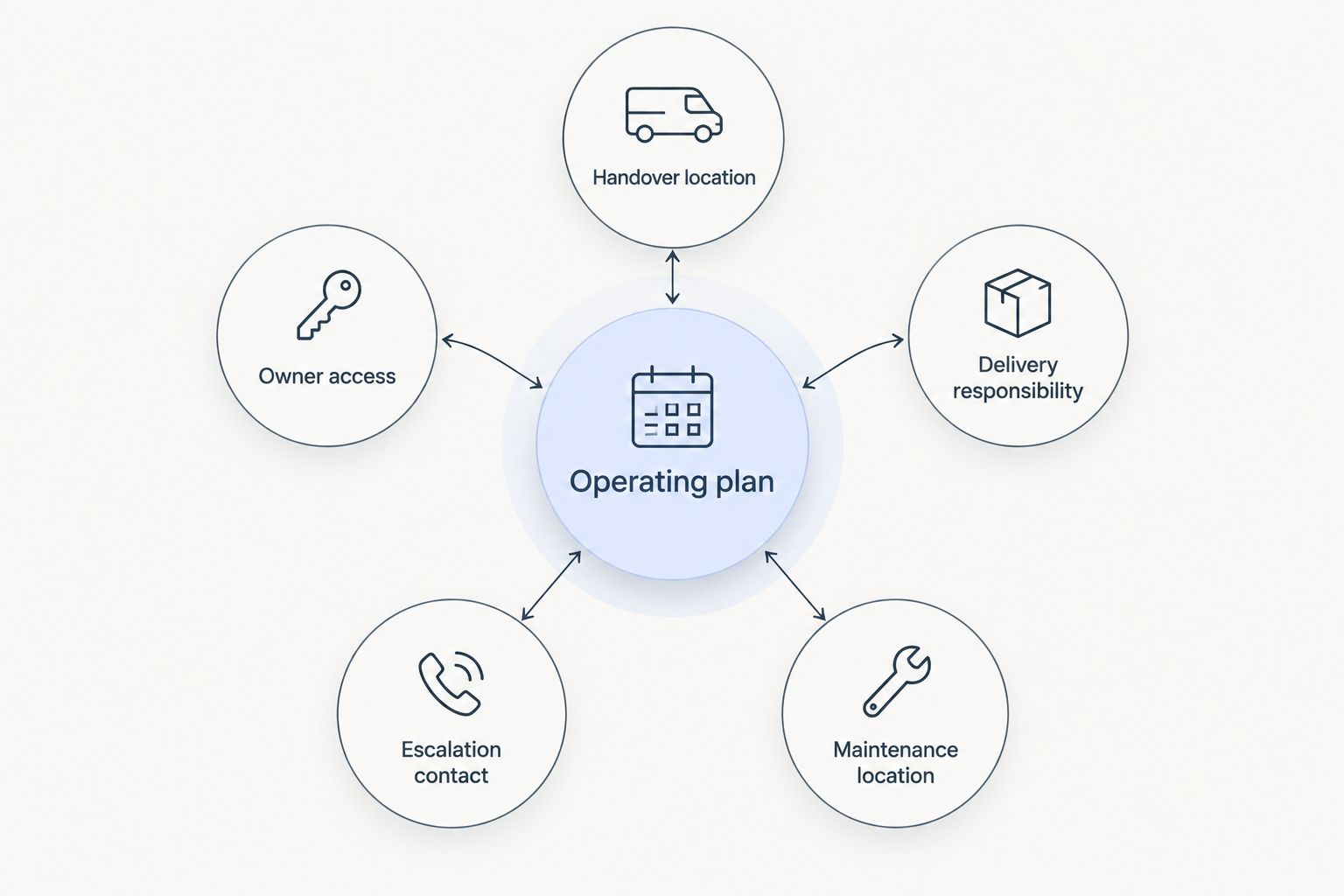
Do not accept a broad service-area statement as a complete logistics plan. Prepare a separate task sheet for Las Vegas, Bullhead City, and Laughlin if your vehicle will operate across those locations. Each sheet should identify where the vehicle starts, who handles it, and how it gets back.
For Las Vegas, confirm your proposed handover location and the procedure for delivery changes. For Bullhead City, confirm where inspections and maintenance coordination happen. For Laughlin, confirm delivery responsibilities and the return process. Apply all three questions in every city; none is exempt from the same controls.
Drivev3 serves all three locations, but your written arrangement still needs to establish the operating details for your car. Best for: owners comparing local service arrangements rather than a company name alone. The benefit is fewer undefined responsibilities; the limitation is that written plans still need active follow-through.
Use these labels on each city’s task sheet:
- Handover location: Record the agreed starting and return points.
- Delivery responsibility: Identify who moves the vehicle and under which terms.
- Maintenance location: Establish where vehicle-care work is coordinated.
- Escalation contact: Name the person who handles problems.
- Owner access: Document how you request and receive your vehicle back.
Document condition before authorizing rental use
Create a baseline condition record yourself before transferring the car. Photograph exterior panels, wheels, glass, upholstery, controls, and included accessories. Record existing marks plainly; an honest starting record is more useful than a flattering set of listing photographs.
Repeat the agreed inspection process around rentals and maintenance events. Condition records help establish what changed, but they do not guarantee reimbursement or determine insurance coverage. Those outcomes depend on the applicable terms and circumstances.
The Turo fleet management damage documentation guide addresses this part of the ownership workflow. For 2026, make record access an explicit management requirement, not something you request only after discovering damage.
Best for: owners who want a traceable vehicle history. Documentation supports accountability; its limitation is that photographs alone do not resolve every dispute. Specify:
- Baseline condition: Keep dated records before the management handover.
- Trip inspections: Define who records condition before and after use.
- Included equipment: List keys, charging equipment, and other supplied items.
- Issue reporting: Establish how you receive notice of new concerns.
- Record access: Confirm where records live and how you obtain copies.
Control maintenance, repairs, and time offline
Begin with the vehicle manufacturer’s maintenance guidance and your existing service records. Keep a simple maintenance calendar and log completed work. Renting the vehicle does not replace its care requirements or remove your responsibility to understand its condition.
Ask a prospective manager how maintenance coordination works before authorizing rental use. Drivev3 coordinates maintenance, but you should request the actual approval process, expense responsibilities, and arrangements for taking your vehicle out of service.
Separate routine coordination from repair authority. A person arranging an appointment is not automatically authorized to approve every repair. Your agreement should also explain what happens when a safety concern requires the car to stop operating before you respond.
For your 2026 operating plan, prioritize a clear offline decision over keeping every rental date open. Best for: owners who want delegated coordination while retaining defined approval rights. The limitation is that maintenance still creates expense and interrupts rental use.
- Service schedule: Track manufacturer guidance and completed work.
- Approval rules: Specify which decisions require owner authorization.
- Safety concerns: Define who can suspend rental use and notify you.
- Work records: Request invoices and descriptions of completed repairs.
- Return checks: Establish who confirms the vehicle is ready after service.
Review owner results and vehicle oversight together
Start with a spreadsheet that separates rental receipts, management deductions, vehicle expenses, and owner payments. Review a 30-day reporting period using the same categories each time. Reconcile actual records rather than treating the amount deposited into your account as the whole financial picture.
Ask for the basis of every deduction and distinguish expenses paid through the manager from expenses you pay separately. A busy rental calendar is not a net-return calculation. Your review should also account for time offline and personal-use restrictions that affect whether the arrangement meets your goals.
Vehicle oversight belongs in this review too. When choosing vehicle tracking equipment, separate the equipment decision from the operating policy: decide who can access location information, what disclosures apply, and who responds to alerts. Tracking does not replace inspections, guest communication, or an agreed response process.
Best for: owners who want evidence that delegation is working. The benefit is a repeatable review; the limitation is that a single reporting period cannot establish long-term profitability. Your review should include:
- Rental receipts: Match reported activity to the statement.
- Deductions: Check each charge against the agreement and supporting records.
- Owner expenses: Include relevant costs paid outside the manager’s statement.
- Offline time: Record maintenance, repairs, and other interruptions.
- Next actions: Assign unresolved questions to a named person.
Compare management options for luxury vehicle owners
Choose the arrangement that matches the work you want to retain. These are operating options, not interchangeable promises of income. For 2026, compare the actual written scope before deciding which offers the right balance of control and delegation.
| Option | Best for | Main benefit | Key limitation |
|---|---|---|---|
| Self-management | Owners who want direct control of daily operations | You handle booking, condition checks, and decisions yourself | You remain responsible for coordination and interruptions |
| Limited co-hosting | Owners seeking help with specific tasks | You can delegate selected responsibilities | Unassigned tasks remain yours; scope needs careful definition |
| Drivev3 fleet management | Owners seeking family-owned service across Las Vegas, Bullhead City, and Laughlin | Booking and maintenance coordination, delivery, and direct owner access | Vehicle-specific responsibilities and contract terms still need confirmation |
Request transparent written terms with no hidden fees or unexplained deductions. Do not assume an advertised service description answers questions about insurance, repair authority, deposits, or rental eligibility.
Large rental-chain consumer offerings are not a substitute for evaluating an owner-management agreement. Compare the service you actually need; company size alone does not establish who will handle your vehicle better.
Common mistakes luxury car owners make
Treating a premium vehicle as proof of profitable demand
A desirable car does not establish its future net returns. Build the ownership budget first, then evaluate actual rental results against that budget. Avoid commitments that depend on an earnings promise.
Leaving personal-use access informal
Telling a manager you occasionally need the car is not a reservation process. Agree how to block dates and what happens when your request overlaps an existing commitment. This matters equally in Las Vegas, Bullhead City, and Laughlin.
Assuming all rental channels share the same terms
Turo bookings and private rental arrangements require attention to their respective terms. Ask which arrangement applies to your vehicle and obtain the relevant documents. Never assume protection, eligibility rules, or claims procedures transfer between channels.
Approving repairs without defining authority
An open-ended instruction to keep the car running leaves too much unresolved. Establish approval responsibilities before a repair is needed, including how urgent safety concerns are handled. Keep the resulting work records with your vehicle history.
Confusing a rental inquiry with website checkout
Drivev3’s website currently directs renters to its Turo listings rather than taking bookings or payments itself. As an owner, clarify how booking coordination works for your arrangement. As a renter, follow the listing process and request the actual terms before committing.
FAQ
What does fleet management for luxury car owners include?
Fleet management for luxury car owners coordinates agreed rental operations, vehicle care, and owner reporting. The written scope should identify responsibilities for bookings, delivery, inspections, maintenance, and repair approvals rather than assuming every task is included.
Who is Drivev3 fleet management best for?
Drivev3 fleet management is best for owners seeking family-owned service and direct access to the owners in Las Vegas, Bullhead City, and Laughlin. Its services include booking and maintenance coordination and delivery; request the vehicle-specific scope before proceeding.
Can I still use my luxury car during fleet management?
Personal use depends on your management agreement and existing rental commitments. Agree on advance notice, calendar blocking, and the handover process before placing the vehicle into rental use.
Does renting my luxury car guarantee passive income?
No, renting a luxury car does not guarantee income or profitability. Passive income describes delegating agreed day-to-day operations, while you retain ownership expenses, financial risk, and oversight responsibilities.
Is Turo management the same as private rental management?
No, Turo management and private rental management involve different booking arrangements and applicable terms. Confirm which channel applies and review its documents without assuming identical protection or claims procedures.
What should I ask before handing over my car?
Ask who handles bookings, delivery, inspections, maintenance, repair approvals, and owner reporting. Also request written terms for personal use, expenses, record access, insurance arrangements, and ending management.
Can renters book directly on the Drivev3 website?
No, the Drivev3 website currently sends renters to its Turo listings rather than accepting bookings or payments itself. Confirm the actual listing terms and rental arrangements through that process.
One last thing
Before discussing projected rental activity, ask a prospective manager to walk through an interrupted trip: the car returns with a warning light, another rental is scheduled, and you are unavailable. Who stops the handover, contacts you, authorizes work, and records the outcome?
A clear answer to an inconvenient situation tells you more about delegated operations than a full calendar does. Bring your vehicle details, operating city, and personal-use priorities to a management inquiry so the discussion produces an actionable scope.