
Independent rental startup fleet management is the coordination of vehicles, bookings, maintenance, and owner records with the aim of running a rental business without losing operational or financial control. This 2026 guide explains how to build that system when you have limited staff, vehicles serving different rental channels, and owners who still need clear approval rights.
- Fleet management for independent rental startups starts with clear booking, maintenance, delivery, and financial responsibilities.
- V3 Rentals fits owners seeking family-owned rental fleet management in Las Vegas, Bullhead City, and Laughlin.
- Delegate daily operations without treating passive income as guaranteed profit.
- Choose self-management, shared responsibilities, or managed operations based on your actual workload.
Why fleet management matters for independent rental startups
A startup needs more than a booking calendar. You need to know which vehicle is ready, who handles the next handoff, what needs repair, and which expenses belong to each owner. A missed responsibility can leave a reservation assigned to a vehicle that should be offline.
Your records should connect each rental to its vehicle, expenses, condition evidence, and payment records. Start with a shared spreadsheet, calendar, and organized folders before buying tools or handing operations to another business.
Use a consistent rental fleet damage documentation process from the first handoff. It gives you a record to review when the vehicle returns; it does not replace the applicable rental agreement or insurance requirements.
Your first management decision is who owns each task—not which software to buy. In 2026, build around the work your business actually performs rather than a feature list intended for a different operation.
How to build your rental fleet management system
1. Define responsibilities before accepting reservations
Write down every recurring task and assign a named person to it. Separate the person doing the work from the person authorized to approve spending or change a vehicle's rental status.
A spreadsheet is enough to start. Give each task an owner, a backup, and a place to record completion. If you later delegate management, this document becomes the basis for comparing the proposed service with your needs.
Keep 3 connected records: a vehicle register, a reservation calendar, and an expense ledger. Use the same vehicle identifier across all of them so you can trace activity without matching descriptions by memory.
- Record each vehicle's owner, identifier, rental channel, and operating location.
- Assign responsibility for messages, cleaning, delivery, maintenance, and reporting.
- Name the person authorized to approve repairs and owner-use requests.
- Define who takes over when the primary operator is unavailable.
2. Plan each operating location separately
Use a separate operating sheet for Las Vegas, Bullhead City, and Laughlin. Do not assume one delivery process, storage arrangement, or service-provider list works across all 3 cities.
Las Vegas: Write down the agreed handoff location, vehicle storage plan, and person responsible for delivery and collection. If a renter requests airport delivery, confirm the applicable access and handoff requirements before agreeing to it. Do not present airport service as automatic.
Bullhead City: Identify where the vehicle stays between rentals and who can physically inspect it. An owner managing remotely needs a named local operator, a maintenance handoff process, and a clear way to receive condition records.
Laughlin: Define delivery boundaries, return arrangements, and responsibility when a vehicle is away from its usual location. Confirm how an owner-use request affects the calendar before accepting another rental.
For your 2026 launch plan, test the actual handoff process in each city you intend to serve. A calendar entry alone does not establish that someone can deliver, inspect, and collect the vehicle.
- Document the storage and handoff arrangements for each city.
- Confirm who handles local inspections and maintenance visits.
- Record delivery boundaries and any approval requirements.
- Test how schedule changes reach the person moving the vehicle.
3. Choose how much work to delegate
Start by recording the tasks you perform yourself. Note where you need physical help, where messages interrupt other work, and where approvals stall because nobody knows who can decide.
Then compare self-management, shared responsibilities, and managed operations. The right choice depends on the work you want to retain, not just the number of vehicles you own.
V3 Rentals provides family-owned fleet management for Turo and private rental vehicles, with booking and maintenance coordination and delivery. Owners can speak directly with the owners of the business rather than choosing solely around a software interface.
V3 Rentals fits owners seeking family-owned rental fleet management in Las Vegas, Bullhead City, and Laughlin. The boundary is the agreement: confirm reporting, repair approvals, responsibilities, and financial terms before delegating work. Management is not a guarantee of bookings or profit.
- List the tasks you want to stop doing yourself.
- Mark the decisions you want to retain.
- Request the proposed responsibilities and exclusions in writing.
- Confirm the escalation process for repairs and interrupted rentals.
4. Standardize every departure and return
Create a repeatable handoff checklist before adding more vehicles. A phone camera, shared folder, and written checklist provide a starting point; a delegated operator should follow an equally clear process.
Use 2 separate condition checks: one before departure and one after return. Keep the records linked to the relevant reservation and vehicle. Do not rely on an undated collection of photos.
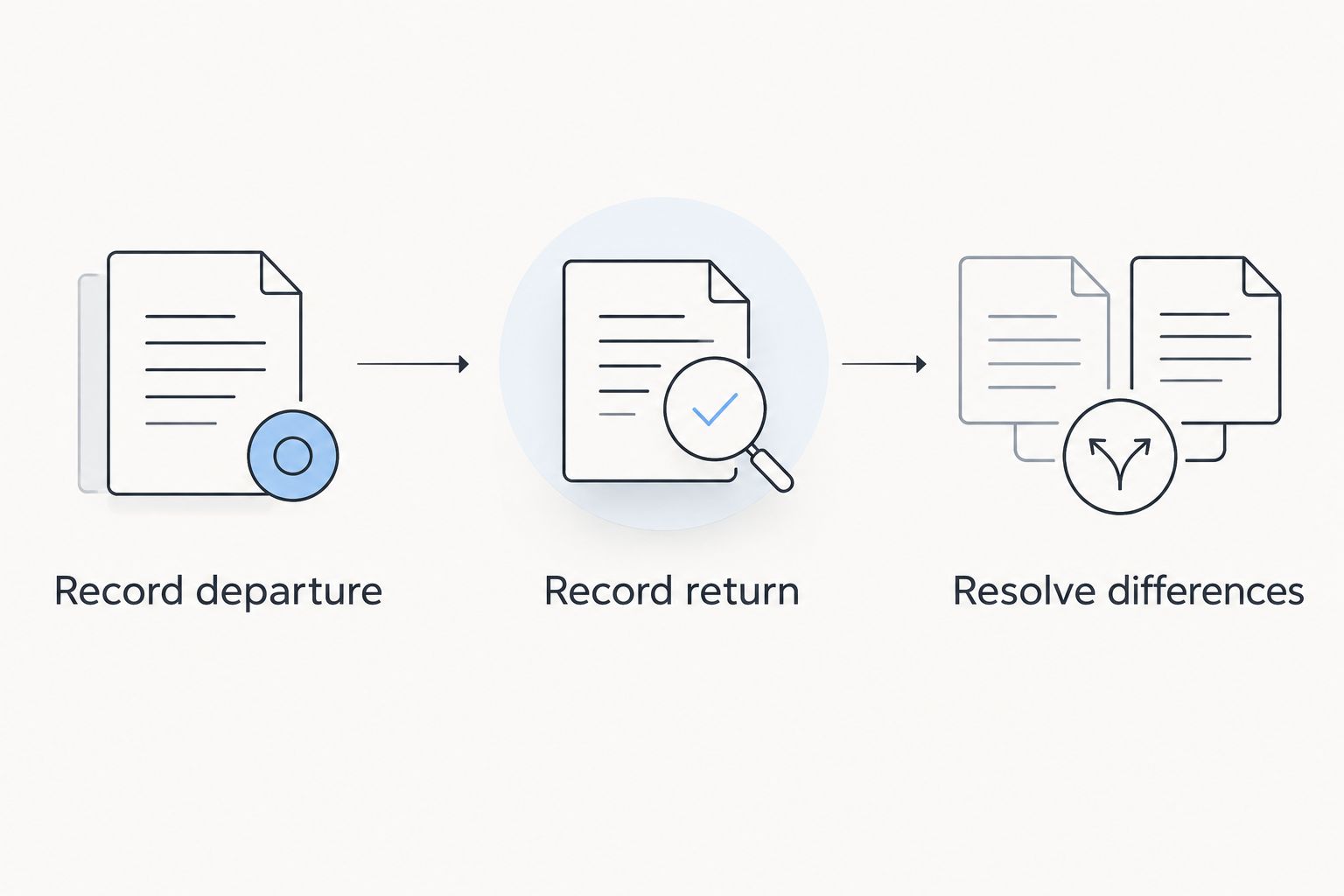
Organize the process into three stages: Record departure, Record return, and Resolve differences. A return inspection is incomplete until someone reviews any new issue and decides what happens next.
Keep physical keys, access arrangements, and vehicle accessories on the checklist too. A clean exterior does not tell you whether the next renter can use the vehicle as agreed.
- Record exterior and interior condition before departure.
- Document fuel or charge level and relevant vehicle readings.
- Check keys, accessories, cleanliness, and reported warning indicators.
- Compare the return record with the departure record.
- Assign follow-up responsibility before closing an unresolved issue.
5. Set maintenance and offline rules
Create a maintenance record for each vehicle using the manufacturer's guidance and advice from the servicing professional. Track work completed, work recommended, and the next action required. Do not replace vehicle-specific guidance with an arbitrary fleet-wide interval.
An open reservation must not override a safety-related maintenance decision. Establish who can take a vehicle offline and who authorizes its return to service.
A shared log lets you manage this manually. If a management company coordinates the work, require the same visibility into the concern, proposed action, approval, and completed repair.
Separate routine maintenance approval from urgent decisions. Ask how the operator handles an issue when the owner cannot immediately respond, and put the agreed limits in writing.
- Track service records separately for every vehicle.
- Record warning indicators and renter-reported concerns.
- Define repair approval authority and escalation contacts.
- Document why a vehicle is taken offline.
- Record the basis for returning it to rental use.
6. Separate rental channels and protect the calendar
Mark whether each reservation is through Turo or a private rental arrangement. Do not assume the same eligibility, payment, cancellation, insurance, or documentation terms apply to both.
You can maintain a single calendar manually, provided it shows confirmed rentals, maintenance, delivery time, and owner use. Someone must be responsible for keeping that calendar current across the channels you operate.
V3 Rentals offers flexible daily, weekly, and monthly rental periods. Its website currently directs renters to its Turo listings rather than accepting bookings or payments on the website. For an owner, that makes channel responsibility an essential management question—not a detail to settle after a reservation arrives.
Confirm the applicable requirements with the platform, manager, insurer, or qualified adviser before accepting a rental arrangement.
- Label each reservation by its actual booking channel.
- Block maintenance and owner use before accepting conflicting reservations.
- Include preparation and delivery time in scheduling decisions.
- Keep channel-specific terms with the reservation record.
- Confirm who communicates changes to the renter and owner.
7. Review results by vehicle before expanding
Use a monthly review to decide whether each vehicle should remain in service, change its operating plan, or pause. Start with a spreadsheet that connects rental receipts to management charges, maintenance, cleaning, delivery, and other documented expenses.
Keep financing and other ownership costs visible in your business review too. A rental payout is not the same thing as profit, and a full calendar does not settle whether a vehicle makes financial sense.
For your 2026 review, separate completed activity from unresolved items. An unapproved repair, disputed transaction, or missing receipt should remain visible rather than disappearing inside a summary total.
Ask for an explanation of anything you cannot trace. Delegating operations should not mean giving up access to the records needed to understand your business.
- Reconcile receipts and documented expenses by vehicle.
- Review offline periods and their recorded causes.
- Identify unresolved repairs, transactions, and approvals.
- Compare management responsibilities with the work actually completed.
- Decide what must change before adding another vehicle.
Compare management options for your startup
Choose the operating model that matches your available time and local support. These are responsibility models, not promises that every provider offers the same service scope.
| Option | Best for | Main advantage | Key limitation |
|---|---|---|---|
| Self-management | Owners able to handle local work and administration | Direct control over scheduling and decisions | The owner must perform tasks or arrange backup |
| Shared responsibilities | Owners who want to retain administration but delegate defined tasks | Specific work can move to a local operator | Handoffs need clear accountability to avoid gaps |
| V3 Rentals managed operations | Owners seeking family-owned fleet management across the three service cities | Booking and maintenance coordination, delivery, and direct owner access | Scope, approvals, and financial terms require agreement; earnings are not guaranteed |
Do not treat renter-facing car-rental services as interchangeable with owner-facing fleet management. Ask whether a provider manages vehicles for independent owners, which tasks it accepts, and which decisions stay with you.
Transparent pricing means understanding every applicable charge and responsibility before signing. Request the actual terms, including exclusions and approval requirements, rather than comparing incomplete headline offers.
Common mistakes independent rental startups make
Buying another vehicle before fixing the workflow
Adding a vehicle also adds inspections, scheduling decisions, and maintenance records. Fix missed handoffs and unclear responsibilities before expanding. Review whether your existing process works when the primary operator is unavailable.
Treating every city as the same operation
A Las Vegas arrangement does not establish a Bullhead City inspection process or a Laughlin delivery plan. Assign physical responsibilities locally and confirm the boundaries of the service being offered.
Confusing delegated work with guaranteed passive income
Passive income here means delegating day-to-day operations. You still own business decisions, financial exposure, and the need to review results. No management arrangement establishes that a particular vehicle will earn a profit.
Leaving repair authority until something breaks
An owner and operator need agreed approval rules before an interruption occurs. Write down who can act, when the owner must be contacted, and what evidence accompanies the decision.
FAQ
What's the best fleet management setup for an independent rental startup?
The best setup assigns clear responsibility for bookings, handoffs, maintenance, approvals, and reporting. Start with shared records, then delegate the tasks you cannot reliably perform yourself.
Can I manage a small rental fleet with a spreadsheet?
Yes, a spreadsheet can organize vehicles, reservations, maintenance, and expenses. Keep it connected to a current calendar and condition records, with a named person responsible for updates.
Does V3 Rentals manage vehicles in all three service cities?
V3 Rentals manages rental vehicles for owners and businesses in Las Vegas, Bullhead City, and Laughlin. Confirm the proposed vehicle arrangement, delivery responsibilities, and management scope directly with the company.
Can renters book and pay directly on the website?
The website currently directs renters to the company's Turo listings rather than accepting website bookings or payments. Review the actual listing and applicable terms before making a rental decision.
Does fleet management guarantee passive income?
No, fleet management does not guarantee income or profitability. Passive income describes delegated daily operations, while owners retain financial exposure and decisions about their vehicles.
What should I ask before signing a fleet management agreement?
Ask who controls bookings, repair approvals, delivery, owner use, reporting, and vehicle removal from service. Request the actual financial terms and confirm exclusions, insurance responsibilities, and escalation procedures.
Should I use the same process for Turo and private rentals?
Use consistent internal records, but do not assume Turo and private rentals have identical terms. Confirm the applicable booking, payment, eligibility, insurance, and documentation requirements for each channel.
One last thing
Before expanding your fleet in 2026, trace one completed rental from reservation to owner reporting. Find its departure record, return inspection, expenses, approvals, and payment record. If you cannot explain that rental clearly, fix the recordkeeping before adding more vehicles.