
Insurance replacement car rental is temporary transportation while your own vehicle is unavailable after a covered claim, with the aim of keeping work, family, and daily travel moving. This 2026 guide explains how to confirm payment responsibility, choose a suitable vehicle, and coordinate pickup and return in Las Vegas, Bullhead City, or Laughlin without assuming your insurer covers every expense.
- For car rental for insurance replacement needs, get written approval before committing to a vehicle or extending a reservation.
- Drivev3 car rental suits renters seeking family-owned service and direct access to the owners; insurance reimbursement requires separate confirmation.
- Match replacement transportation to everyday needs, not the appearance or value of your damaged vehicle.
- Confirm the booking channel, payment responsibility, return deadline, and required receipts before pickup.
Why insurance replacement car rental matters for drivers
A rental reservation and an insurance reimbursement approval are separate decisions. A vehicle can meet your transportation needs without meeting your insurer’s requirements. Settle both questions before you commit.
Drivev3 is a family-owned rental and fleet-management company serving Las Vegas, Bullhead City, and Laughlin. Its service includes direct access to the owners, booking and maintenance coordination, and delivery coordination. Renters currently reach its Turo listings through the website; the website does not take bookings or payments.
For your 2026 replacement rental, identify who approves the expense and who pays the rental provider. Your own policy, another party’s claim, and a personally funded reservation are different arrangements. An open claim alone does not establish reimbursement or protection for the replacement vehicle.
How to arrange an insurance replacement rental
1. Confirm who approves and pays for the rental
Start with your policy documents and a conversation with the claims representative. Ask for written confirmation of the transportation benefit, the approved booking arrangement, and the conditions that end reimbursement. Keep that response with your claim records rather than relying on a phone conversation alone.
If you are pursuing payment from another driver’s insurer, ask whether responsibility has been accepted and whether replacement transportation has been authorized. Do not treat the existence of a claim number as permission to incur expenses.
For a 2026 reservation through Turo, specifically identify the platform and proposed vehicle to the insurer. Approval for a conventional rental arrangement does not establish approval for a different booking channel. Separately confirm what protection applies while you drive the replacement vehicle; reimbursement for transportation and protection against vehicle damage answer different questions.
Ask the representative to address these items in writing:
- Payment responsibility: Who pays initially, and who processes reimbursement?
- Approved arrangement: Does authorization include the proposed provider and booking channel?
- Benefit limits: What limits and exclusions apply under the actual policy or claim?
- Required records: Which approvals, agreements, and receipts must you retain?
- End condition: What event or notice ends the approved rental period?
2. Match the vehicle to your normal routine
Write down the trips you cannot miss before comparing vehicles. School pickup, commuting, medical appointments, and carrying work equipment create different requirements. A replacement should solve those requirements without introducing a new problem, such as unfamiliar charging arrangements or insufficient passenger space.
In Las Vegas, confirm where you need to collect and return the vehicle relative to your home, workplace, and repair shop. In Bullhead City, identify the same locations rather than assuming a nearby-city handoff fits your schedule. In Laughlin, establish the actual meeting location and whether your planned driving includes Bullhead City or other destinations.
For travel between Nevada and Arizona, ask about permitted use under the rental agreement and applicable protection. Geographic proximity is not a substitute for checking the terms. Choose an electric vehicle only after confirming that charging fits your routine and that you understand its return requirements.
Build a short requirements list before requesting a vehicle:
- Passenger needs: Account for everyone who regularly travels with you.
- Cargo needs: Include mobility aids, child equipment, and work items.
- Daily route: Identify commuting, appointments, and essential errands.
- Fuel or charging: Choose an arrangement you can manage throughout the rental.
- Handoff location: Specify the pickup and return points in your actual city.
3. Verify the booking channel and written terms
Compare the proposed rental agreement with the insurer’s authorization before making a reservation. You can do this manually by placing the documents side by side and marking anything that does not match: provider, vehicle category, approved period, or payment responsibility.
Drivev3 car rental is best for local renters who want family-owned service and direct access to the owners. Daily, weekly, and monthly rental periods support different transportation needs, while booking and delivery coordination give you a person to discuss logistics with. These service features do not establish insurance acceptance, direct billing, or reimbursement eligibility.
For a Drivev3 inquiry in 2026, explain that the vehicle is intended as insurance replacement transportation. Ask for the actual rental terms and a transparent written breakdown without hidden fees or surprises. Complete any reservation through the specified Turo listing, not through an assumed website checkout.
Before committing, resolve the following:
- Booking channel: Identify exactly where the reservation and payment occur.
- Driver requirements: Confirm the actual eligibility and authorized-driver terms.
- Rental agreement: Read cancellation, extension, and return conditions.
- Protection arrangements: Confirm applicable protection and your responsibilities.
- Written breakdown: Match the proposed arrangement to the insurer’s approval.
4. Document the handoff before driving away
Use your phone to photograph the replacement vehicle at collection. Record its exterior, interior, dashboard, and any existing damage, then compare those records with the provider’s condition report. Tell the provider about a discrepancy before leaving rather than waiting until return.
A repair-shop handoff, home delivery, and another agreed meeting point each need clear instructions. Delivery coordination does not remove your responsibility to inspect the vehicle or understand the agreement. Keep a copy of the accepted condition record somewhere you can access without the car.
Use a repeatable handoff sequence: Condition photos, Dashboard record, Agreement check, and Handoff confirmation. The same sequence works whether the meeting takes place in Las Vegas, Bullhead City, or Laughlin.
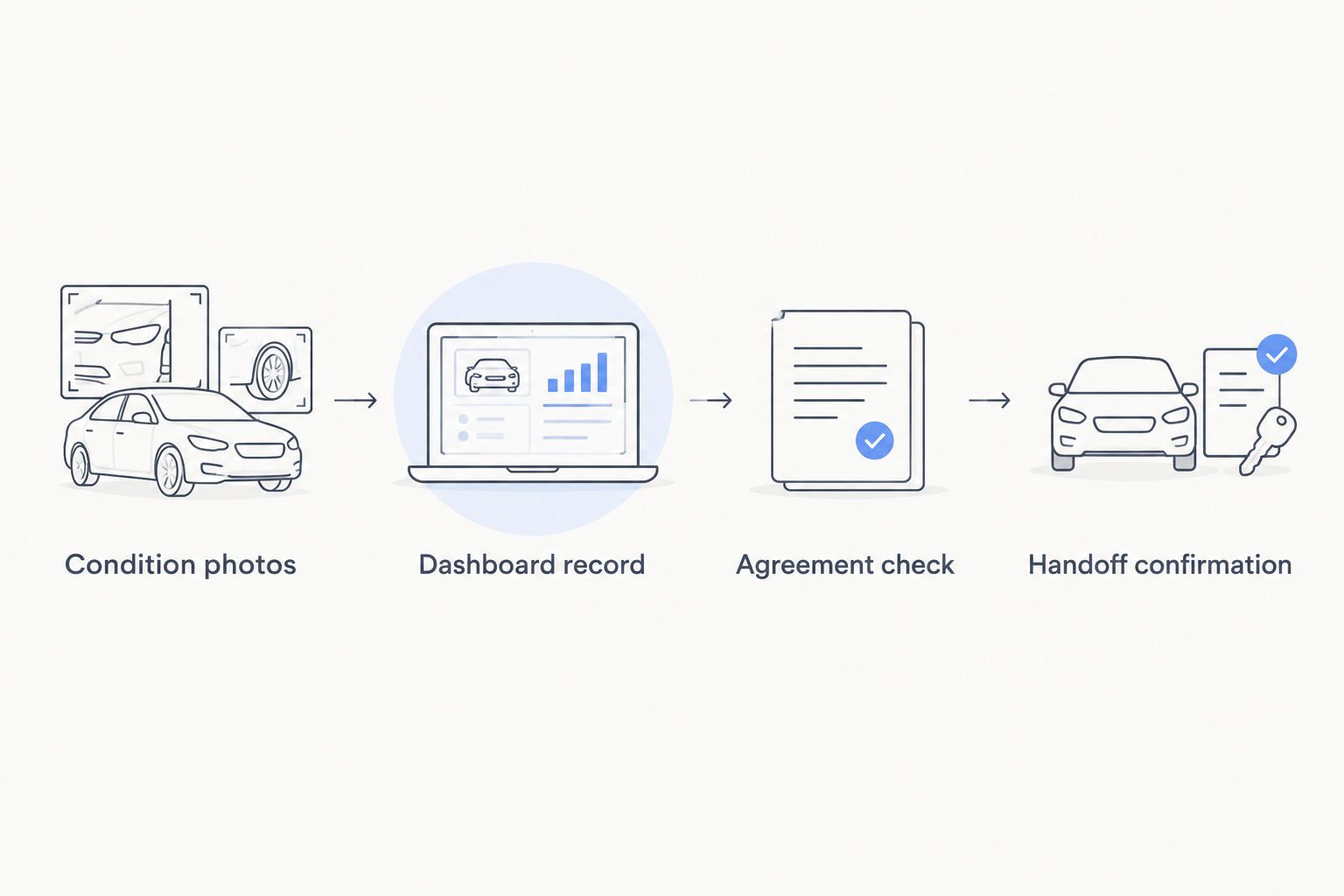
Keep these records together:
- Condition photos: Capture existing marks and the vehicle’s overall condition.
- Dashboard record: Photograph mileage and the fuel or charge display.
- Agreement check: Save the accepted rental agreement and pickup instructions.
- Handoff confirmation: Record when and where you received the vehicle.
5. Coordinate extensions before the approved period ends
Keep the repair shop, insurer, and rental provider informed, but do not assume they exchange every update. A revised repair estimate does not automatically extend your rental agreement. An extended reservation does not automatically extend insurance reimbursement either.
In your 2026 claim records, keep the latest repair update beside the current rental end date. When the repair schedule changes, ask the insurer about continued authorization and ask the provider separately about extending the reservation. Obtain both answers before treating the extra period as approved.
This distinction is central to insurance replacement car rentals: the repair timeline, reimbursement authorization, and rental agreement must stay aligned. A delay in one does not rewrite the others.
Use a simple calendar reminder and shared document to track:
- Repair updates: Record the shop’s latest completion estimate.
- Insurer approval: Save written authorization for any additional rental period.
- Provider confirmation: Obtain acceptance of the reservation extension.
- Personal responsibility: Identify expenses that remain yours under the actual terms.
- Return planning: Confirm the handoff location and instructions before the deadline.
6. Close the rental and reimbursement records together
Plan the return when the repair shop confirms your vehicle’s status, then check the insurer’s actual end-of-benefit instructions. Do not assume reimbursement continues until a convenient weekend or until you finish submitting paperwork.
At return, photograph the vehicle again and document the dashboard readings. Follow the agreed return process and retain the completion confirmation. If a disagreement appears later, matching collection and return records give you a clearer account than memory alone.
For owners or businesses whose managed vehicle needs repairs, keep the management agreement separate from the renter’s replacement-transportation claim. Fleet-management responsibilities, vehicle downtime, and authorization to release another vehicle require their own decisions. Delegating day-to-day work does not guarantee income or eliminate ownership responsibilities.
Finish with a complete record:
- Return evidence: Save condition photos and handoff confirmation.
- Final statement: Retain the provider’s itemized rental record.
- Claim submission: Send the documentation requested by the insurer.
- Open questions: Resolve disputed items against the written authorization and agreement.
Compare replacement transportation options
Choose the arrangement your insurer accepts and your routine supports. No provider type proves reimbursement eligibility by itself. Confirm the specific arrangement rather than relying on a familiar name or a verbal assurance.
| Option | Best for | Practical advantage | Key limitation |
|---|---|---|---|
| Insurer-arranged reservation | Drivers prioritizing an approved claims process | Starts with an arrangement the insurer identifies | Vehicle suitability and all terms still need confirmation |
| Independently arranged rental | Drivers who want to compare providers themselves | Lets you assess location, vehicle needs, and handoff arrangements | You must establish approval and payment responsibility yourself |
| Drivev3 through its Turo listings | Local renters seeking family-owned service | Direct owner access and booking, maintenance, and delivery coordination | Insurance acceptance and reimbursement require separate confirmation; website checkout is not offered |
| Temporary use of a household vehicle | Drivers with another suitable vehicle to use | Avoids arranging a separate rental agreement | Vehicle access, permitted drivers, and applicable insurance still need checking |
A large rental chain and a family-owned operator should face the same questions about your actual reservation. Compare written terms and workable logistics; do not assume either category has better insurance acceptance, fewer restrictions, or a suitable vehicle without confirmation.
Common mistakes insurance replacement renters make
Treating rental reimbursement as vehicle protection
Payment for temporary transportation and protection while driving the replacement vehicle are separate issues. Ask the insurer and rental provider to explain each arrangement in writing, including your responsibilities if damage occurs.
Booking a premium vehicle before approval
A damaged premium vehicle does not establish approval for the same category of replacement. Define the space and driving needs you must meet, then get the proposed rental arrangement approved before committing.
Treating nearby cities as interchangeable handoff points
Las Vegas, Bullhead City, and Laughlin each require an agreed collection and return plan. Specify the location, responsible person, and instructions; do not assume delivery or a different-city return is included.
Letting the repair shop authorize the extension
The repair shop reports repair progress; it does not replace the insurer’s reimbursement decision or the rental provider’s extension approval. Keep all parties informed and retain each confirmation separately.
Returning the car without closing the paperwork
A completed handoff is not the same as a complete reimbursement file. For your 2026 records, retain the return confirmation, final statement, and insurer correspondence until the claim’s rental portion is resolved.
FAQ
What's the first step when I need a rental after an accident?
Ask the insurer who authorizes replacement transportation and how payment works before reserving a vehicle. Get the approved arrangement, limits, required records, and end conditions in writing.
Can I use a Turo rental for an insurance replacement?
Use a Turo rental for insurance replacement only after confirming that the insurer accepts the specific arrangement. Identify the platform and proposed vehicle, and separately verify the protection that applies while driving.
Does Drivev3 take insurance replacement bookings on its website?
Drivev3 does not take bookings or payments on its website; renters are directed to its Turo listings. Ask about the proposed rental terms and confirm reimbursement with the insurer before committing.
Can I arrange pickup in Las Vegas, Bullhead City, or Laughlin?
Request a specific pickup and return arrangement in whichever city you need. The company serves Las Vegas, Bullhead City, and Laughlin, but the location, delivery arrangements, and actual terms require confirmation.
Does insurance automatically pay for the same type of car I own?
Do not assume insurance pays for the same type of vehicle you own. The applicable policy or claim authorization determines the approved replacement arrangement, so confirm the proposed vehicle before reserving.
What happens if my repairs take longer than expected?
Request continued authorization from the insurer and a reservation extension from the rental provider separately. A repair delay does not automatically change either agreement.
What documents should I keep for rental reimbursement?
Keep written authorization, the rental agreement, extension approvals, the final rental statement, and return confirmation. Retain pickup and return condition records as well, and follow the insurer's specific submission requirements.
One last thing
Ask what ends reimbursement before asking how long repairs will take. Those answers can describe different timelines, and the difference affects your transportation plan.
Before your 2026 reservation, send the claims representative the proposed provider, booking channel, vehicle requirements, and intended rental period. Then give the rental provider the approved arrangement. Written agreement on both sides is more useful than discovering a mismatch after pickup.