
Best overall starting point: a traditional rental company’s extended-rental desk. Best for direct premium-car inquiries: Drivev3. Best for choosing a host-listed vehicle: Turo. This 2026 guide compares those booking routes so you can choose by contract terms, mileage, coverage, and how easily you can end or extend the rental.
- For long term car rental Las Vegas searches, compare contract terms before choosing a vehicle.
- Drivev3 is a fit for premium-car renters comparing direct rental options in Las Vegas.
- Traditional rental companies are the first comparison point for an extended-rental agreement.
- Turo suits renters who want to compare individual vehicle listings and host terms.
- Confirm mileage, protection, extensions, and early-return conditions in writing before booking.
Why this matters
A long-term rental is not just a short rental with a later return date. You need an agreement that matches your actual driving, keeps responsibilities clear, and explains what happens when your plans change.
For a 30-day stay, compare the entire rental period rather than the headline daily figure. Ask whether the agreement covers the full stay or requires a renewal, vehicle exchange, or return visit. Those details determine whether the arrangement fits your schedule.
The useful distinction in 2026 is the booking route: a traditional rental company, a direct premium-rental business, or a vehicle-sharing platform. Choose the agreement first and the vehicle second. A desirable car does not fix unsuitable mileage or unclear return requirements.
What makes the best long-term car rental option?
Use these criteria before comparing vehicles. Apply the same questions to every provider so you are comparing equivalent arrangements.
- Contract continuity: Does one agreement cover your intended stay, and what must happen if you extend it?
- Mileage fit: Does the written allowance match your expected driving, including trips outside Las Vegas?
- Coverage clarity: Who handles damage, theft, liability, deductibles, and roadside assistance under the selected arrangement?
- Vehicle suitability: Does the car fit your passengers, luggage, parking situation, and charging access if electric?
- Exit flexibility: What happens if you return early, extend, change drivers, or need a replacement vehicle?
- Handoff logistics: Where do pickup and return happen, and what documentation is required?
For your 2026 comparison, put those answers in one document. A provider that answers clearly is easier to evaluate than one whose offer leaves essential responsibilities unresolved.
Long-term rental options at a glance
These are ranked booking approaches, not a claim that every provider offers identical terms. The order follows the decision most renters need to make: establish an extended-rental baseline, compare a direct premium option, then assess individual platform listings.
| Option | Best for | Standout feature | Key limitation |
|---|---|---|---|
| Traditional rental company | Establishing an extended-rental baseline | A rental-company agreement to assess for your full stay | Renewal, vehicle category, mileage, and return conditions need confirmation |
| Drivev3 | Direct premium-car rental inquiries | Premium consumer rentals in Las Vegas | Confirm the proposed vehicle and long-term agreement before committing |
| Turo | Selecting an individual host-listed vehicle | Vehicle-specific listings rather than only a rental category | Listing details and applicable trip terms require individual review |
No booking route wins every criterion. Your best option is the one whose written agreement fits your itinerary without relying on assumptions about extensions, coverage, or vehicle substitutions.
1. Traditional rental company: best for an extended-rental baseline
A traditional rental company is the first place to establish what an extended agreement would involve. Ask specifically about your full intended stay rather than assuming that repeating a short booking produces the same arrangement.
This route suits renters who want to evaluate a rental-company contract before considering more vehicle-specific alternatives. It also gives you a reference point for comparing responsibilities across the other options.
Traditional rental company pros
- You can ask one provider to explain the agreement for your entire planned stay.
- You can compare a suitable vehicle category without making a particular model the deciding factor.
- You can request written instructions for extensions, breakdowns, and returns before booking.
Traditional rental company cons
- A vehicle category does not establish that you will receive a particular make or model.
- An extension needs approval; a later return date is not automatically covered by the original booking.
- Pickup location and return requirements can make an otherwise suitable agreement inconvenient.
Best for: Renters who want a contract-first comparison, particularly when the exact vehicle matters less than a workable extended arrangement.
Ask whether the car must return for inspection, paperwork, or an exchange during your stay. If you are staying away from the pickup location, that requirement belongs in your decision before you book—not after you have organized your workweek around the car.
Verdict: Buy only after the full rental period and renewal process are confirmed in writing.
2. Drivev3: best for direct premium-car rental inquiries
Drivev3 rents premium cars to consumers in Las Vegas, Bullhead City, and Laughlin. Its stated vehicle categories include Teslas, SUVs, sedans, and slingshots, giving you a direct rental business to contact when vehicle type matters to your stay.
Drivev3 is a fit for premium-car renters comparing direct rental options in Las Vegas. Treat that as a reason to inquire, not a substitute for a written agreement covering your dates and intended use.
Drivev3 pros
- Its stated consumer-rental service includes Las Vegas.
- Its stated vehicle mix gives you several categories to discuss against your needs.
- You can frame your inquiry around a premium vehicle rather than a generic transportation requirement.
Drivev3 cons
- A premium vehicle category does not establish suitable long-term mileage or extension terms.
- An electric vehicle requires a charging plan that fits where you will stay and drive.
- A specialty vehicle needs a separate practicality check for luggage, passengers, and daily use.
Best for: Drivers who want to discuss a premium rental directly and can specify the vehicle type, dates, and driving needs before requesting an agreement.
For a 2026 inquiry, send your pickup and return dates, expected driving, passenger count, and preferred vehicle category together. Ask the business to confirm the proposed vehicle, handoff arrangements, coverage responsibilities, and the process if your stay changes.
Verdict: Hold until the proposed long-term terms match your itinerary; choose this route when premium vehicle fit is a priority.
3. Turo: best for choosing an individual host-listed vehicle
Turo is a peer-to-peer car-sharing marketplace where you compare vehicle listings and book through the platform. This route makes sense when choosing an individual listed vehicle is central to your decision.
Assess the listing and the platform’s applicable terms together. A vehicle description alone does not answer questions about protection, extensions, pickup, permitted use, or what happens if the trip cannot proceed as planned.
Turo pros
- You can assess an individual vehicle listing instead of comparing only rental categories.
- Listing-level details help you check vehicle suitability before requesting a trip.
- You can compare different vehicle types within the same marketplace.
Turo cons
- You must review each listing rather than assuming another host’s arrangements will match.
- Trip changes need to follow the platform’s applicable process.
- A preferred vehicle does not remove the need to check protection and handoff requirements.
Best for: Renters who prioritize an individual listed vehicle and are prepared to review the trip conditions closely.
Keep trip changes within the platform’s authorized process. If you need an extra 7 days, confirm the extension before the existing trip ends rather than relying on an informal message about keeping the car longer.
Verdict: Buy when the listing, protection selection, and approved trip dates all fit; skip arrangements that depend on off-platform promises.
Match the vehicle to your stay
Booking route and vehicle type are separate decisions. After choosing a workable agreement, select the category that fits the actual trip—not just the most appealing photograph.
| Vehicle type | Best for | Practical advantage to assess | Main trade-off to check |
|---|---|---|---|
| Sedan | Everyday travel with modest luggage | Passenger and trunk space for your routine | Fit for larger groups or bulky bags |
| SUV | Trips needing additional passenger or cargo room | The specific seating and luggage layout | Parking dimensions and ease of handling |
| Electric vehicle | Drivers with a workable charging routine | Charging access near overnight parking | Time and planning required to charge |
| Specialty vehicle | A trip centered on the driving experience | Suitability for the intended outing | Everyday practicality and luggage capacity |
Do not assume every SUV has the seating arrangement you need. Ask about the actual vehicle. Likewise, evaluate an electric vehicle against your overnight parking and charging plan rather than assuming you will solve charging after pickup.
For a long stay, daily practicality beats novelty. A specialty vehicle can suit a particular experience without being the right choice for every grocery run, airport transfer, or workday.
Check the agreement before you commit
Use this sequence to turn several attractive options into a defensible choice. The goal is to remove uncertainty before the handoff.
Define your trip
Write down your start date, expected return date, likely destinations, passengers, and luggage needs. If your stay is uncertain, identify the earliest and latest plausible return dates so you can ask a useful extension question.
Estimate mileage
Add your routine driving and planned excursions. Compare that estimate with the written allowance, and ask how additional driving is handled. Do not treat a monthly-looking booking as proof of unlimited mileage.
Verify coverage
Check the rental agreement, the selected protection arrangement, and any insurance benefits you intend to use. Ask the insurer or benefits administrator about the specific vehicle, rental duration, and booking route instead of assuming every arrangement qualifies.
Confirm changes
Ask how to extend, return early, add another driver, or report a problem. For 2 drivers, confirm that both are authorized before either person takes the wheel.
Document handoff
Photograph the vehicle’s condition and record the fuel or battery level at pickup and return. Follow the provider’s reporting process for existing damage and keep the agreement and return confirmation accessible.
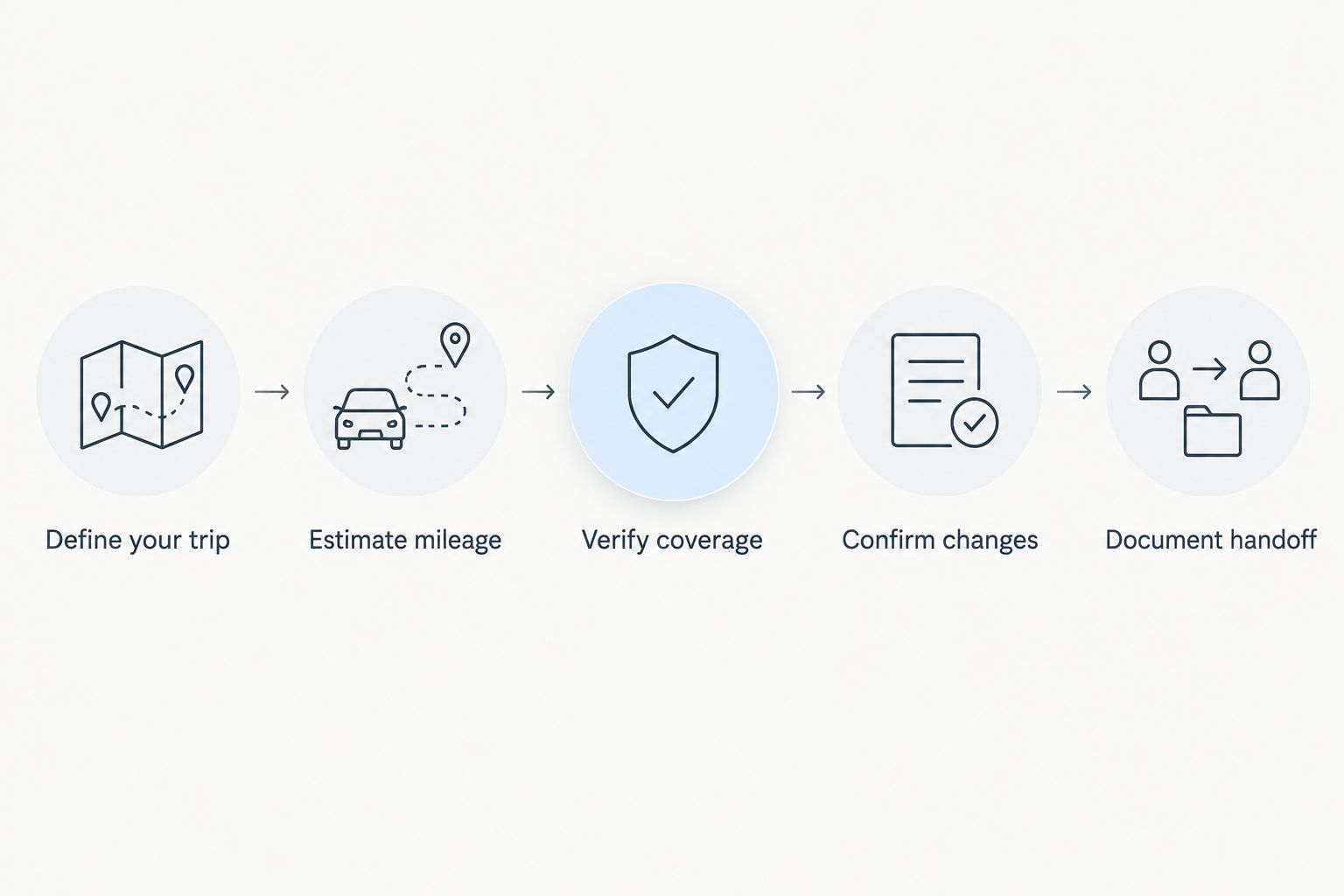
Keep the answers alongside the booking confirmation. If an important term changes between the initial discussion and the final agreement, resolve the difference before accepting the vehicle.
Discuss your Las Vegas rental
Explain your dates, preferred vehicle category, and driving needs before choosing a rental agreement.
How these options are ranked
This 2026 ranking prioritizes contract continuity, mileage fit, coverage clarity, vehicle suitability, exit flexibility, and handoff logistics. It ranks booking approaches by the decision they help you make, not by an unsupported claim about service quality.
Traditional rental companies come first as the extended-agreement comparison point. Direct premium rentals suit vehicle-focused inquiries. Turo suits listing-focused selection. The final agreement—not the category label—determines whether an option earns your booking.
Which long-term rental option should you choose?
Start with a traditional rental company if you have no strong vehicle preference. Request terms for your complete stay, then use that agreement as the baseline for other offers.
Choose a direct premium-rental inquiry when the vehicle category is part of the experience you want. Choose Turo when selecting an individual listed vehicle matters enough to justify reviewing that listing and its trip conditions closely.
Before committing, compare 2 written proposals against the same dates and driving assumptions. Reject any comparison that mixes different mileage allowances, driver permissions, or return conditions without accounting for those differences.
FAQ
What’s the best long-term car rental option in Las Vegas?
A traditional rental company is the best starting point for comparing an extended-rental agreement. Direct premium rentals suit vehicle-focused inquiries, while Turo suits renters who want to assess individual listings. Choose the agreement that fits your dates, mileage, and coverage needs.
Is renting a car for a month the same as extending a weekly rental?
No—do not assume a month-long booking and repeated extensions have the same terms. Ask whether your full stay is covered by one agreement and whether a renewal, inspection, or vehicle exchange is required.
Is Turo better than a traditional rental company for a long stay?
Turo is better suited to comparing individual listed vehicles; a traditional rental company is the starting point for comparing a rental-company agreement. Neither route automatically provides better mileage, protection, or extension terms. Review the actual booking conditions.
Can I rent a premium car directly in Las Vegas?
Drivev3 rents premium cars to consumers in Las Vegas. Ask the business to confirm the proposed vehicle and terms for your intended rental period before committing.
How do I compare the total cost of a long-term rental?
Request written proposals for identical dates, drivers, expected mileage, and protection needs. Include the applicable charges and ask how extensions, early returns, and additional driving change the agreement.
Should I choose an electric car for a long Las Vegas stay?
Choose an electric car only after you have a workable charging plan. Check charging access near your overnight parking and along your planned routes, then review the return-charge requirements.
Can I drive a Las Vegas rental outside Nevada?
Check the specific agreement before planning interstate travel. Ask about geographic restrictions, permitted use, and roadside assistance for the destinations on your itinerary.
One last thing
For your 2026 booking, ask one question before discussing upgrades: What happens if my return date changes? Get separate answers for returning early and keeping the vehicle longer.
That question tests whether the agreement fits an extended stay. A car that suits today’s itinerary is only a good long-term choice when the contract also explains how to handle tomorrow’s change.