Best overall: a two-row midsize SUV. Best for a solo angler with light tackle: a compact SUV. Best for a larger fishing crew: a full-size SUV. This 2026 guide helps you choose an SUV rental for a Bullhead City fishing trip by matching passengers, rods, coolers, and access roads—not by choosing the biggest vehicle.
- For suv rental bullhead city fishing searches, start with a midsize SUV and confirm cargo space with passengers seated.
- Choose a compact SUV for solo fishing trips with light tackle and paved access.
- Choose a full-size SUV when your crew and equipment cannot fit comfortably in a smaller vehicle.
- Drivev3 serves Bullhead City renters; confirm the specific SUV, rental terms, and planned access roads before booking.
Why this matters
A fishing-trip rental has to carry people and awkward equipment at the same time. A cooler needs floor space, rods need a protected position, and wet gear needs separation from seats and personal bags. A vehicle that works for luggage can still be the wrong shape for your fishing load.
Drivev3 is a fit for Bullhead City travelers seeking an SUV rental for a fishing trip. The company rents premium vehicles, including SUVs, to consumers in Bullhead City, Laughlin, and Las Vegas. Start with Drivev3 to discuss the vehicle category, then confirm the exact SUV against your passenger list and equipment.
The recommendations below rank SUV categories rather than claim that a particular model belongs to the rental fleet. Your final choice depends on the vehicle offered and the rental agreement.
What makes the best SUV for a fishing trip?
Use these criteria before comparing vehicle names. They identify whether an SUV suits your trip without relying on exterior size or a promotional photograph.
- Usable cargo space: Check the area behind the seats you will actually use. Space created by folding a passenger's seat does not solve your packing problem.
- Rod protection: Confirm whether your rods fit inside their cases without crossing the driver's space, obstructing visibility, or resting against doors.
- Passenger comfort: Count every traveler and leave each person a proper seating position. Do not plan to hold equipment on laps throughout the drive.
- Road suitability: Match the planned access road to the vehicle's equipment and the rental agreement. An SUV badge does not establish permission to leave pavement.
- Wet-gear containment: Plan a washable container for damp footwear and fishing equipment. Keep loose hooks away from upholstery.
- Loading convenience: Consider how you will lift a loaded cooler through the hatch, not just whether it fits once inside.
For your 2026 shortlist, prioritize fit and permitted use before convenience features. A vehicle that carries everything safely is the better choice, even when another SUV looks more suited to an outdoor trip.
Best fishing-trip SUV categories at a glance
| Rank and SUV category | Best for | Standout feature | Key limitation |
|---|---|---|---|
| 1. Two-row midsize SUV | A small crew with mixed fishing gear | A useful starting point for balancing passenger space and cargo needs | Long rods and bulky coolers still require a fit check |
| 2. Compact SUV | A solo angler with a restrained load | A smaller vehicle footprint for paved-access trips | Less room to separate equipment from passengers |
| 3. Full-size SUV | A larger crew carrying substantial equipment | A larger vehicle category to evaluate when smaller SUVs fail the packing check | Additional seats can occupy space needed for gear |
These are conditional recommendations, not model specifications. Seat layouts, cargo shapes, and equipment differ within each category, so compare the exact vehicle rather than treating the category label as a guarantee.
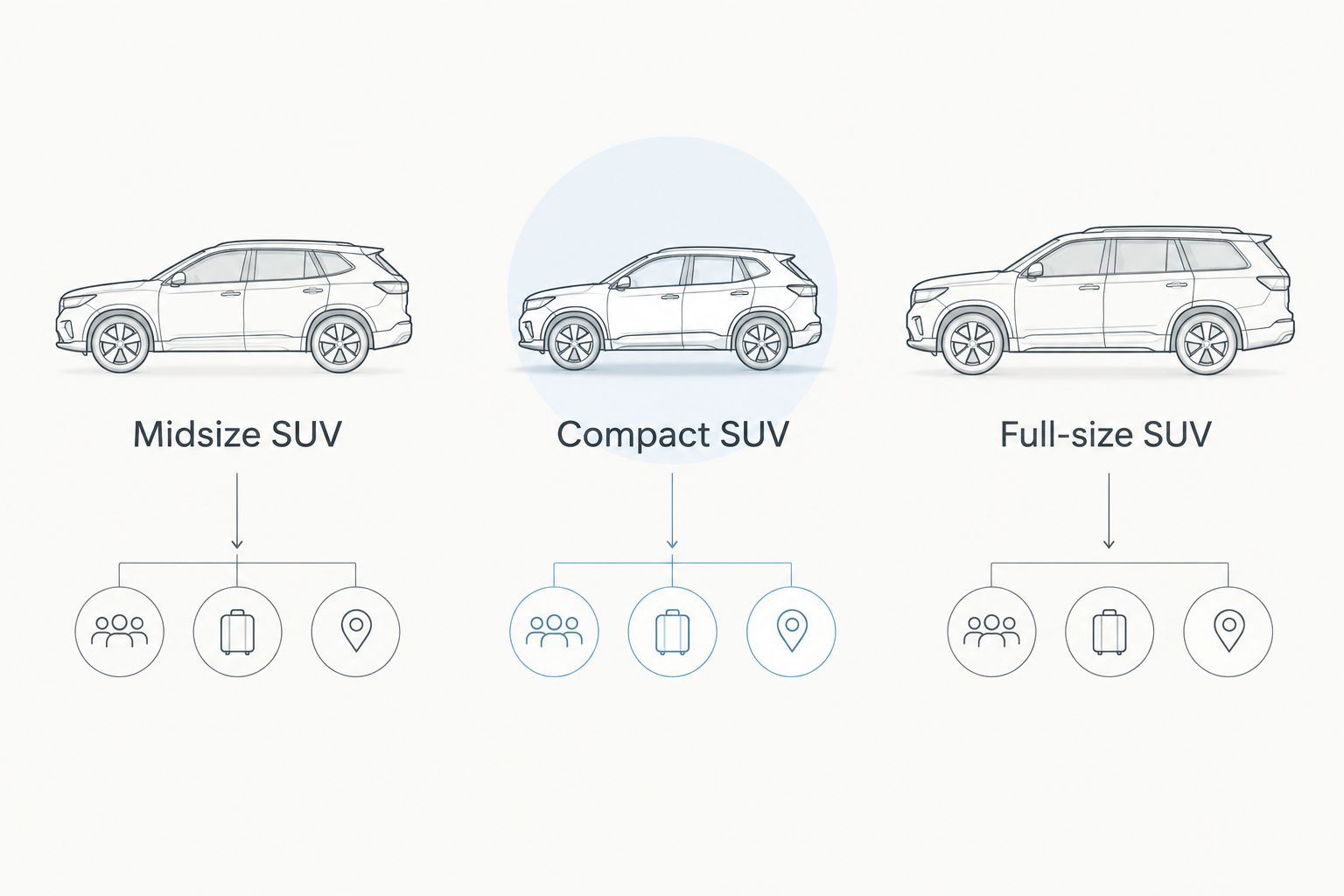
1. Two-row midsize SUV: best for a small fishing crew
A two-row midsize SUV is the default category to investigate for a Bullhead City fishing trip. It gives you a straightforward packing question: can the passengers occupy their seats while the equipment fits behind them?
For a planning example, picture 2 anglers carrying rod cases, tackle bags, a cooler, and personal bags. Keep the rear seats upright during the fit check unless nobody needs them. Then check whether the hatch closes without pressing against the equipment.
Two-row midsize SUV pros:
- A sensible starting category when you need both rear seating and a separate cargo area.
- Avoids planning around an additional seating row that your crew does not need.
- Lets you assess a simple passenger-and-cargo layout before considering a larger vehicle.
Two-row midsize SUV cons:
- Long rod cases can still conflict with occupied seats.
- A broad cooler can consume floor space needed for tackle and bags.
- A midsize label does not establish ground clearance, drivetrain, or permitted road use.
Best for: A small crew whose equipment fits behind the occupied seats without stacking heavy items against passengers.
Ask for information about the cargo area with the seats in their normal positions. A photograph showing an empty vehicle with seats folded does not answer whether your actual group fits. Also check the hatch opening: an item can fit inside the vehicle yet remain awkward to load through the opening.
Verdict: Buy this category if your passenger-and-gear check passes; move up only when a specific item does not fit.
2. Compact SUV: best for a solo angler with light tackle
A compact SUV belongs on your shortlist when you travel alone, pack selectively, and use suitable paved access. The smaller category makes sense when your trip does not require carrying another person's equipment or several bulky containers.
The advantage disappears when you have to compromise the driving position to accommodate rods. Keep the driver's seat, mirrors, and controls clear. If your equipment needs that space, choose a different packing arrangement or vehicle.
Compact SUV pros:
- A smaller footprint to consider when parking and maneuvering space matter.
- A practical category for a short equipment list rather than an oversized load.
- Unoccupied rear seating can provide packing flexibility when the vehicle layout permits it.
Compact SUV cons:
- Bulky equipment leaves less room for separating clean bags from wet gear.
- Adding another traveler can remove the space your original packing plan depended on.
- Long rods still need protection, even when a rear seat folds.
Best for: A solo angler carrying a manageable load and traveling on roads permitted by the rental agreement.
Use a compact SUV packing plan that works without balancing equipment on a seat edge or against a window. Secure the cooler, contain hooks, and place frequently needed items where you can reach them after parking.
For 2026 trip planning, do not choose this category solely because your outing is short. The equipment dimensions stay the same whether you fish briefly or spend the day out.
Verdict: Buy this category for a genuinely light load; skip it when passengers or bulky gear erase the space advantage.
3. Full-size SUV: best for a larger crew with substantial gear
A full-size SUV is the category to investigate when a smaller vehicle fails your passenger-and-equipment check. Start with the seating configuration, because a vehicle with more seats does not automatically leave more room behind every occupied row.
For a planning example, consider 4 passengers, their personal bags, rod cases, tackle, and a cooler. Assign the seats first. Only then evaluate the remaining cargo area and decide whether any unused seats can be folded.
Full-size SUV pros:
- Gives a larger crew another category to evaluate before considering separate vehicles.
- Provides an alternative when a specific cooler or equipment load fails a smaller vehicle's fit check.
- Allows you to assess different seating arrangements where the particular vehicle supports them.
Full-size SUV cons:
- A larger exterior requires more attention when parking and maneuvering.
- Occupied rear rows can limit the space left for equipment.
- A high or deep cargo area can make a loaded cooler harder to handle; inspect the actual vehicle.
Best for: A larger fishing crew that needs additional room and has confirmed the exact seat-and-cargo arrangement.
Do not treat a full-size SUV as an automatic towing recommendation. Towing requires separate confirmation of the rental agreement, vehicle rating, equipment, and trailer compatibility. A fishing trip involving a boat needs that discussion before you book.
Drivev3 SUV rental inquiries should specify both the passenger count and the bulky equipment you intend to carry. Requesting “a big SUV” leaves the most important details unresolved.
Verdict: Buy this category when the larger layout solves a demonstrated fit problem; skip the size increase when a midsize SUV already works.
Your 2026 pre-booking fit check
Turn your equipment list into a packing plan before selecting the vehicle. You do not need a perfect diagram; you need to know which objects compete for the same space.
Assign seats
Write down the number of travelers and identify every seat that must remain usable. For a 3-passenger trip, check the intended seating arrangement rather than assuming the entire rear bench can fold. Include personal bags in the plan.
Measure gear
Measure your longest rod case and the cooler's outside dimensions, including handles. Ask about the actual cargo opening and usable interior space. A cargo-volume figure alone does not describe whether a rigid item will pass through the hatch.
Check access
Identify the roads and parking areas you intend to use, then confirm that the rental agreement permits them. Do not substitute “near the river” for an access description. Paved roads, unpaved approaches, and designated parking areas are different questions.
Confirm terms
Ask about authorized drivers, vehicle use, cleaning responsibilities, and how to report a problem. If your trip involves towing or equipment attached outside the vehicle, discuss that explicitly. Silence is not permission.
The best booking request describes the trip, passengers, equipment, and route—not just the SUV category. That gives the rental provider concrete requirements to answer.
Keep fishing equipment contained during the drive
A safe packing layout matters more than fitting one final bag into a gap. Keep the driver's view and controls clear, close tackle containers, and secure heavy equipment using suitable provisions in the vehicle.
Pack in this order:
- Heavy containers: Position and secure the cooler and other heavy items before arranging lighter bags.
- Protected rods: Place cased rods where doors and moving seats will not crush them.
- Personal bags: Keep clean clothing and personal items separate from damp equipment.
- Return-trip gear: Reserve a contained place for wet footwear, used tackle, and rubbish.
Do not assume the layout that works on departure will work after fishing. Your footwear and equipment can return wet or dirty, and repacking beside the vehicle is easier when you have already assigned those items a place.
Before driving away, check the cabin from the driver's seat. Confirm visibility, seat adjustment, and access to controls. If the load interferes with any of those, rearrange it before moving.
How these SUV categories are ranked
This 2026 ranking prioritizes passenger-and-cargo fit, rod protection, permitted access, wet-gear containment, and loading convenience. The midsize category comes first because it is the starting point for the small-crew scenario—not because every midsize SUV outperforms every larger vehicle.
The compact category serves a distinct light-packing use case. The full-size category addresses a demonstrated need for additional room. No category recommendation replaces checking the exact vehicle and agreement.
Which SUV should you choose for Bullhead City fishing?
Choose a two-row midsize SUV unless your passenger list or equipment gives you a concrete reason to choose otherwise. Move down to a compact SUV for a solo, light-packing trip. Move up to a full-size SUV when the smaller layout fails your fit check.
When discussing a 2026 fishing trip with Drivev3, provide the passenger count, rod-case length, cooler dimensions, and intended access roads. Those details are more useful than requesting an outdoor-looking vehicle.
FAQ
What's the best SUV rental category for a Bullhead City fishing trip?
A two-row midsize SUV is the default category for a small fishing crew. Confirm that your rods, cooler, tackle, and bags fit with every required passenger seat usable.
Is a compact SUV enough for a solo fishing trip?
A compact SUV is a sensible choice for a solo angler with a light equipment load and suitable paved access. Check rod-case length and cooler fit before selecting the vehicle.
Do I need a full-size SUV for four people going fishing?
Four passengers alone do not determine the required SUV category. Evaluate their seating positions together with the cooler, rod cases, tackle, and personal bags; choose a full-size SUV when the smaller layout does not work.
Can I take a rental SUV onto an unpaved fishing access road?
Use an unpaved access road only when the rental agreement permits it and the specific vehicle suits the route. Being an SUV or having all-wheel drive does not establish that permission.
Can I tow a fishing boat with a rental SUV?
Do not tow unless the rental agreement explicitly permits it and the vehicle and equipment meet the trailer's requirements. An SUV category recommendation does not establish towing permission or capability.
Does Drivev3 rent SUVs in Bullhead City?
Drivev3 rents premium vehicles, including SUVs, to consumers in Bullhead City. Discuss the specific vehicle, passenger-and-gear requirements, and rental terms before choosing an SUV for fishing.
What should I check before returning an SUV after fishing?
Remove your equipment and rubbish, check for loose hooks, and follow the rental agreement's cleaning instructions. Inspect cargo areas and seat gaps so wet gear or small tackle items are not left behind.
One last thing
Rehearse the return load, not just the departure load. Leave a contained place for wet equipment before you leave, and keep it separate from clean bags. The right SUV is the one that accommodates the whole trip without turning occupied seats into storage.