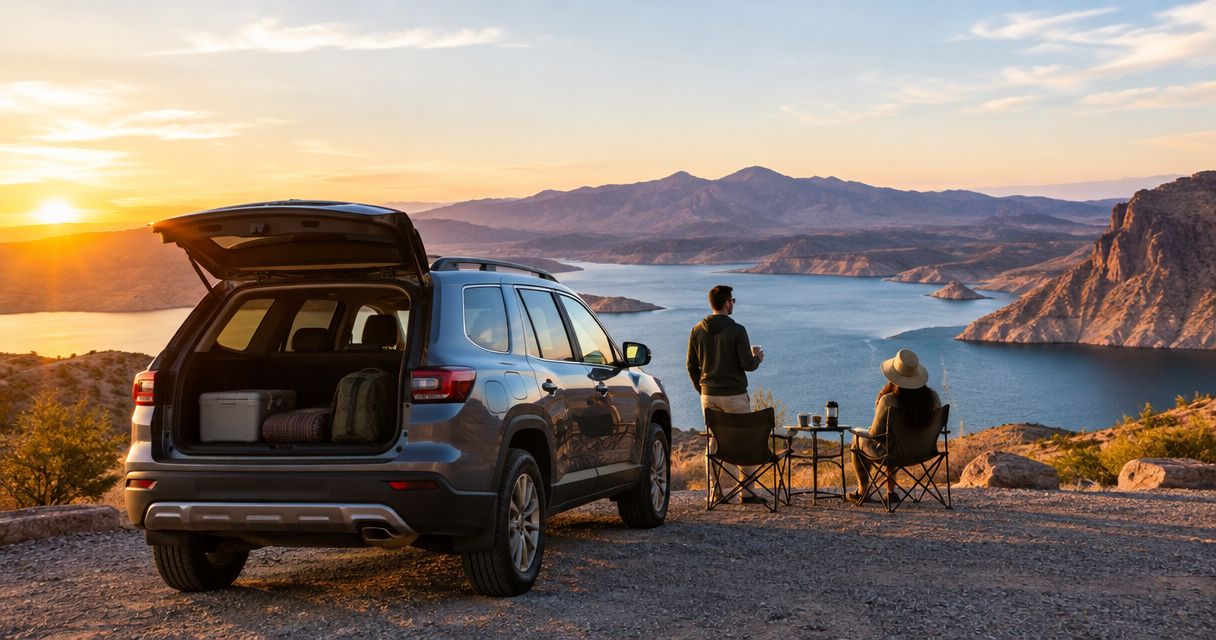
Best overall for a paved-road weekend: a two-row midsize SUV. Best for light packing: a compact SUV. Best for extra passengers: a three-row SUV. Best for bulky luggage: a full-size SUV. For your 2026 Lake Mead trip, choose the rental around passengers, packed cargo, and permitted roads—not the biggest vehicle in the search results.
- For suv rental lake mead searches, a two-row midsize SUV is the default for a paved-road weekend.
- Drivev3 serves Las Vegas travelers seeking premium SUV rentals; confirm the exact vehicle before booking.
- Choose a three-row SUV for passengers, but check luggage space with every required seat upright.
- A full-size SUV suits bulky packing only when the actual cargo layout meets your needs.
- An SUV badge does not establish permission to drive on unpaved roads.
Why this matters
A Lake Mead weekend asks you to solve two separate problems: getting everyone there comfortably and carrying what you need once you arrive. A vehicle that looks spacious with its rear seats folded tells you little about luggage room when those seats hold passengers.
Drivev3 rents premium vehicles, including SUVs, to consumers in Las Vegas, Bullhead City, and Laughlin. Drivev3 is a fit for Las Vegas travelers seeking a premium SUV rental for a Lake Mead weekend. Choose the exact vehicle on its documented seating, cargo layout, and rental terms; the category name alone is not a booking decision.
This guide ranks SUV categories, not specific models or a confirmed rental lineup. The categories overlap: a full-size SUV can also have three rows. The ranking separates the reason you would choose each one, so you can match your trip to a vehicle rather than chase a badge.
What makes the best SUV rental for Lake Mead?
For a 2026 weekend, use these five criteria before comparing vehicles:
- Occupied seating: Count everyone traveling, then check that each person has a suitable seat and restraint. Do not treat a folded seat as available passenger space.
- Usable cargo: Evaluate the luggage area with every required seat upright. Include coolers, overnight bags, folding chairs, and other equipment you actually plan to bring.
- Road permission: Match your itinerary to the rental agreement. Ground clearance and all-wheel drive do not establish permission to leave paved roads.
- Cabin comfort: Confirm working air conditioning and the ventilation arrangement for occupied rear seats. Check the actual vehicle, not assumptions about its category.
- Driving fit: Choose dimensions you are comfortable parking and maneuvering. Extra vehicle size needs a specific purpose, such as seating or bulky cargo.
The best SUV is the smallest actual vehicle that satisfies your passenger, cargo, and route requirements. That rule keeps the decision focused without assuming any particular model has enough room.
SUV rental options at a glance
| SUV category | Best for | Standout feature to check | Key limitation |
|---|---|---|---|
| Two-row midsize SUV | A couple's paved-road weekend with overnight gear | Cargo layout behind the rear seats | Category alone does not guarantee room for bulky equipment |
| Compact SUV | A lightly packed trip with easy maneuvering as the priority | Exterior size and luggage-area shape | A cooler and rigid luggage can compete for limited space |
| Three-row SUV | A group that needs additional passenger seats | Seating arrangement with required restraints | Using the last row reduces the space available for luggage |
| Full-size SUV | A trip centered on bulky luggage or equipment | Usable cargo area in the required seating configuration | Larger exterior dimensions require more attention when parking |
These are decision categories, not promises about a rental fleet. Compare the exact vehicle offered against your packed load before committing.
1. Two-row midsize SUV: best for a couple's weekend
A two-row midsize SUV is the default choice for a paved-road Lake Mead weekend with 2 adults and overnight gear. It keeps the selection focused on a usable luggage area rather than extra seating you do not need. Check whether your cooler, bags, and chairs fit without obstructing the driver's view.
For 2026 planning, start with your actual packing list. A vehicle photograph taken with the rear seats folded is not evidence that the same load fits behind upright seats. Request a clear view of the luggage area in the configuration you will use.
Two-row midsize SUV pros:
- Keeps the search centered on passenger comfort and luggage space rather than unused extra rows.
- Gives you a straightforward seating configuration to assess before booking.
- Lets you compare your gear against one clearly defined cargo area.
Two-row midsize SUV cons:
- Does not solve a trip that requires additional passenger rows.
- The midsize label does not establish cargo dimensions or guarantee cooler clearance.
Best for: Two adults carrying weekend bags and outdoor essentials on a paved-road itinerary.
When considering a Drivev3 SUV rental, ask for the exact vehicle and its seating configuration. Do not assume that a named category establishes equipment, cargo capacity, or road permissions.
Verdict: Buy—book this category when the actual vehicle fits your gear without unnecessary extra seating.
2. Compact SUV: best for a lightly packed trip
A compact SUV belongs on your shortlist when your luggage is modest and maneuvering matters more than carrying bulky equipment. Think of a trip built around small overnight bags rather than a large collection of rigid containers. Confirm the fit before booking; compact vehicles differ in cargo shape.
Packing flexibility matters here. Soft bags can adapt to an irregular luggage area, while a hard cooler cannot. Measure your largest rigid item and compare it with the actual opening and usable floor space.
Compact SUV pros:
- Makes exterior size a central part of the choice.
- Suits a packing plan built around small, flexible luggage.
- Avoids selecting extra passenger rows when you have no use for them.
Compact SUV cons:
- Bulky equipment can consume the luggage area quickly.
- A compact label does not establish fuel consumption, passenger comfort, or exact dimensions.
Best for: Light packers who prioritize a manageable vehicle over extra cargo flexibility.
For a 2026 trip, do not select a compact SUV on an assumed saving. Compare the actual booking terms and vehicle details, then decide whether the smaller footprint serves your itinerary.
Verdict: Buy—choose a compact SUV when your packed load fits with the required seats upright.
3. Three-row SUV: best for additional passengers
A three-row SUV is the passenger-first choice. Its value is the additional seating arrangement, not an automatic increase in usable luggage space. Once the last row is occupied, you must assess the cargo area behind it.
Write down which seats your group needs before comparing vehicles. Then include every passenger's bag in the packing check. If children are traveling, verify child-restraint installation requirements for the specific vehicle and seats you intend to use.
Three-row SUV pros:
- Provides a category to consider when two rows do not satisfy your seating needs.
- Lets you evaluate passenger placement across separate rows.
- Offers a clear way to distinguish a passenger-focused booking from a cargo-focused one.
Three-row SUV cons:
- Occupying the last row leaves less luggage space than folding that row.
- Access, legroom, and restraint installation depend on the specific vehicle.
- Extra seats do not prove that the whole group's equipment will fit.
Best for: A group whose first requirement is seating everyone appropriately.
Do not book a three-row SUV until the passengers and their luggage fit at the same time. If they do not, compare a different vehicle or rethink the packing plan rather than treating advertised seating as the complete answer.
Verdict: Hold—confirm the occupied-seat cargo layout before booking a three-row SUV.
4. Full-size SUV: best for bulky packing
A full-size SUV is worth comparing when large, rigid items drive the decision. Coolers, folding equipment, and substantial luggage make cargo shape important. Check the actual floor area, loading opening, and seating layout rather than assuming that the largest-looking vehicle solves the problem.
Full-size and three-row are not opposing categories. One describes vehicle size; the other describes seating arrangement. A full-size SUV with every row occupied still needs a separate luggage check.
Full-size SUV pros:
- Gives cargo-heavy travelers a category to investigate.
- Keeps attention on the space required by bulky, nonflexible items.
- Supports a direct comparison between your load and the actual vehicle layout.
Full-size SUV cons:
- Larger exterior dimensions demand more attention in parking spaces and tight maneuvers.
- Extra size is unnecessary when a smaller vehicle already meets your needs.
- Full-size does not guarantee a particular towing capability or permission to tow.
Best for: Travelers whose bulky equipment determines the vehicle choice.
For 2026 bookings, verify towing separately if your trip involves a trailer. Do not infer permission, suitable equipment, or towing capacity from the SUV category.
Verdict: Buy—choose full-size only when its verified layout solves a cargo requirement a smaller option does not.
Match the SUV to your packed trip
Use this sequence before you reserve. It separates your needs from the rental listing and exposes a poor fit early.
Passenger count
List every traveler and any required child restraints. Identify the seats you need to keep upright throughout the drive. For example, a trip with 2 adults and 2 children requires a different seating check from a couple traveling alone, even when both groups pack similar luggage.
Packed cargo
Gather the bags and equipment you intend to bring. Measure rigid items, especially anything that must remain upright. Compare the load with the actual cargo area rather than a photograph showing folded passenger seats.
Road permission
Write down your intended stops and road surfaces. Check current National Park Service information for Lake Mead National Recreation Area and read the rental agreement. A road's public access status and a rental vehicle's permitted use are separate checks.
Vehicle fit
Confirm the exact vehicle or the substitution terms. Review seating, cargo access, air conditioning, and any equipment your itinerary requires. If a substitution changes the seating or luggage layout, repeat the fit check.
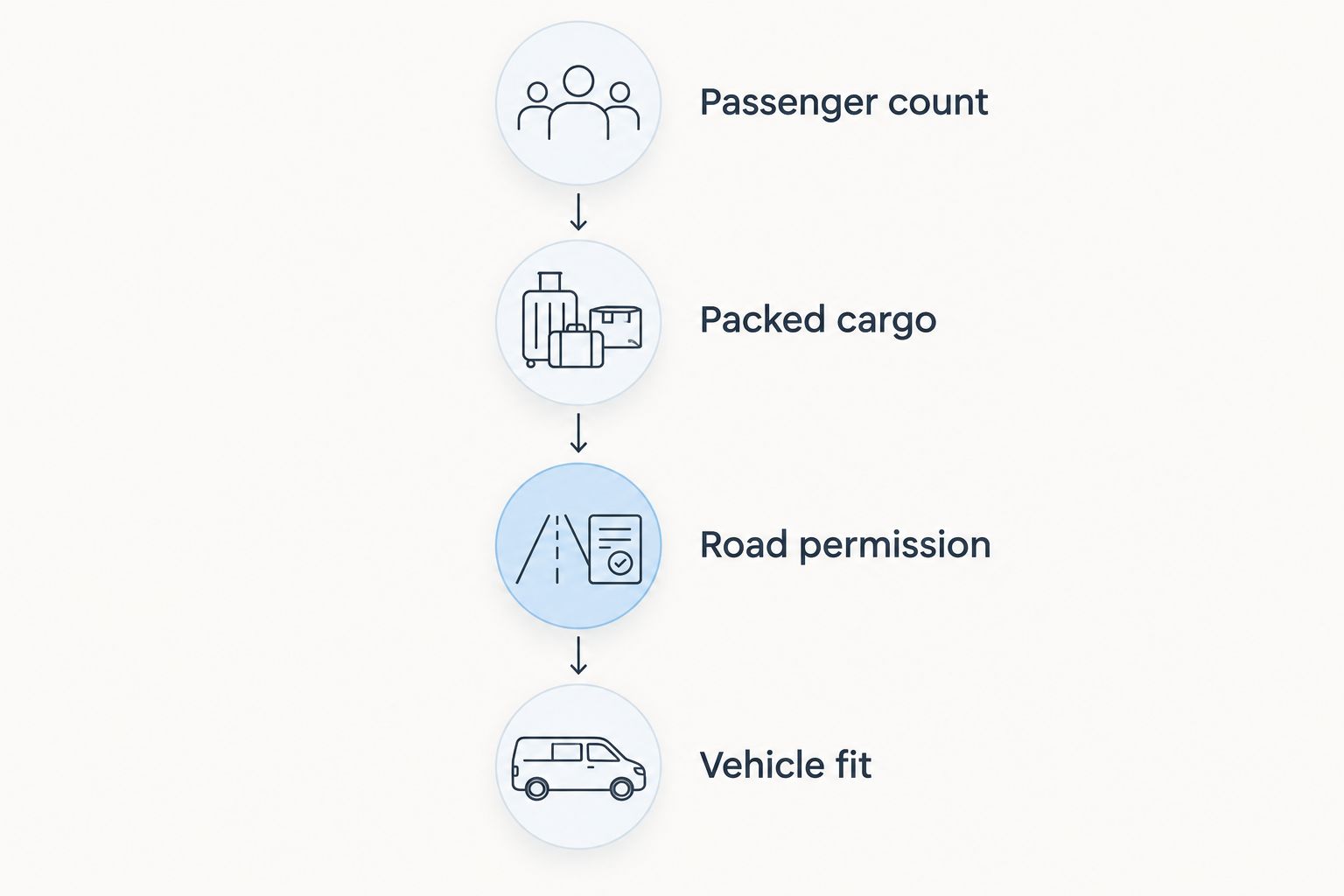
A booking is ready when all four checks agree. A larger SUV does not repair a prohibited route, and a permitted route does not repair insufficient luggage space.
Find your weekend SUV
Compare your passenger and cargo needs with the exact rental vehicle before booking.
How these SUV categories are ranked
The ranking puts a two-row midsize SUV first for the defined default trip: a couple traveling on paved roads with weekend gear. Compact SUVs serve light packing, three-row SUVs serve additional passengers, and full-size SUVs serve bulky loads.
This is a use-case ranking, not a road test or a comparison of named rental vehicles. Each recommendation depends on the same criteria: occupied seating, usable cargo, road permission, cabin comfort, and driving fit. No category wins when the actual vehicle fails one of your essential requirements.
Which SUV should you choose for Lake Mead?
Choose a two-row midsize SUV unless your passengers or packed equipment give you a clear reason to change categories. Move to compact for light packing and a smaller footprint, three-row for additional passengers, or full-size for verified cargo needs.
For your 2026 Lake Mead weekend, keep the decision tied to the exact vehicle. Ask Drivev3 about the rental you are considering, then match its confirmed details to your itinerary. A category recommendation starts the search; the passenger-and-cargo check finishes it.
FAQ
What's the best SUV rental for a Lake Mead weekend?
A two-row midsize SUV is the default for a couple's paved-road Lake Mead weekend with overnight gear. Choose a different category when passenger seating, bulky cargo, or driving preferences require it, and verify the actual vehicle before booking.
Is a compact SUV enough for a Lake Mead trip?
A compact SUV is enough when your passengers and packed gear fit in the actual vehicle with the required seats upright. Check rigid items such as coolers against the luggage opening and usable floor area.
Should I rent a three-row SUV for a group?
Choose a three-row SUV when your group needs the additional passenger seats. Check luggage space with those seats occupied, because folded-seat photographs do not represent your travel configuration.
Do I need a full-size SUV for Lake Mead?
You do not need a full-size SUV solely because you are visiting Lake Mead. Choose one when its verified cargo and seating layout meets a requirement that your smaller options do not.
Can I drive a rental SUV on unpaved roads at Lake Mead?
An SUV rental does not establish permission to drive on unpaved roads. Check the rental agreement and current National Park Service access information for your intended route before driving it.
Does Drivev3 rent SUVs for Las Vegas travelers?
Drivev3 rents premium vehicles, including SUVs, to consumers in Las Vegas, Bullhead City, and Laughlin. Confirm the exact vehicle, seating arrangement, equipment, and rental terms for your trip.
What should I check before booking an SUV for Lake Mead in 2026?
Check passenger seating, packed cargo, road permissions, and the exact vehicle or substitution terms. Include air conditioning, child-restraint requirements, and any equipment essential to your itinerary in that review.
One last thing
Check the loading opening, not just the space behind it. A rigid cooler must pass through the opening before it can use the cargo floor. Before your 2026 booking, compare your largest item with both—and keep required passenger seats upright during the fit check.